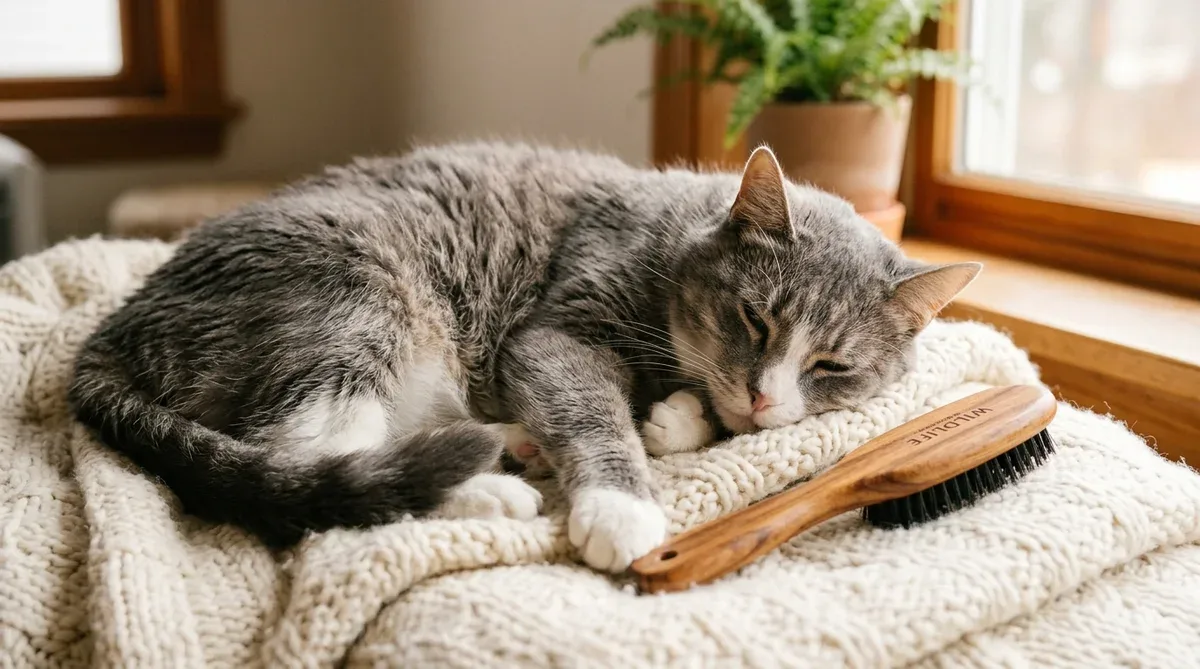
Nobody signs up for cat parenthood to step in warm puddles at 3 a.m. Here is the honest picture: occasional vomiting is common in cats and often fixable at home. But "common" is not "nothing" — a vomit episode has a cause, and the causes range from "she ate like a woodchipper" to "she swallowed a hair tie and needs surgery tonight." This guide sorts them.
First: Is It Vomiting or Regurgitation?
Check this before anything else, because they are different problems with different causes.
- Vomiting involves visible heaving — abdominal contractions, drooling, a loud "BLUH-bluh-bluh" — and the output is partially digested food, bile (yellow foam), or liquid.
- Regurgitation is passive and dramatic: food comes back up almost undigested, often in a tubular shape, with no heaving. It points to the esophagus, not the stomach — and it has an entirely different vet workup.
If you can, film the next episode and show your vet. It saves an appointment's worth of guesswork.
Cause 1: Hairballs (the One Most Owners Miss Until It's Chronic)
Hairballs are the default answer, and often the right one. Cats swallow a coat's worth of loose hair grooming, and when the stomach can't pass it into the intestines, it comes back up — usually a tubular log with a strand of fur running through it. Long-haired breeds, shed-heavy spring and fall, and senior cats with slower motility are the usual suspects.
The fix is moving hair through instead of up: a daily hairball-remedy gel (mineral-oil based, palatable) lubricates the GI tract, and fiber — pumpkin or a grass source — sweeps it along. Our full protocol is in the senior cat hairball prevention guide.
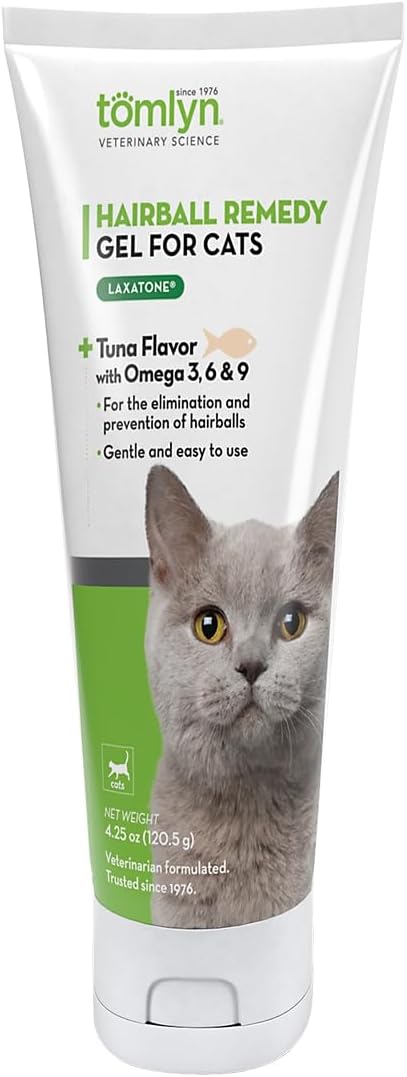
Tomlyn Laxatone Hairball Remedy Gel for Cats, Tuna (4.25 oz)
The vet-default lubricating gel. Put a strip on the paw once daily during shed season; hair exits the other end instead of the rug
Cause 2: Eating Too Fast (the Woodchipper Cat)
Five minutes after a meal, the food returns, barely touched, in a slimy tube. This is the classic fast-eater vomit, and it is a bowl problem, not a stomach problem. Cats that bolt food swallow air and pile a dry mound into a stomach that's ready for a slower pace.
Two changes stop most cases: a slow-feeder bowl that forces the cat to fish kibble out of obstacles, and 4-6 tiny meals instead of 2 big ones. Ceramic is the material to buy — plastic slow feeders develop micro-scratches that grow acne-causing bacteria around the chin.
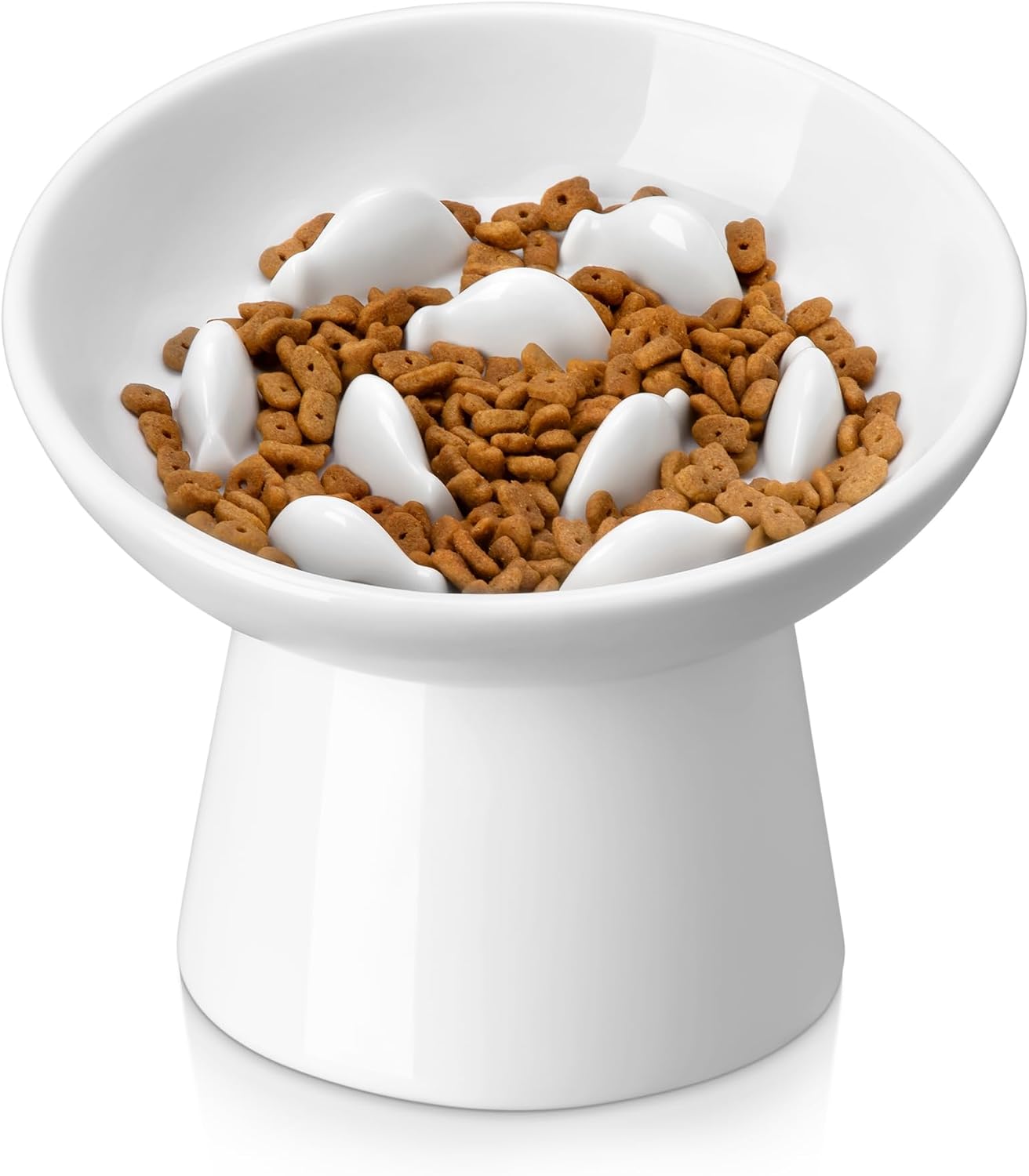
vancasso Ceramic Slow Feeder Cat Bowl (6.25 in, Elevated, White)
Glazed ceramic maze that slows fast eaters without chin acne — the material upgrade over plastic slow feeders

Melamine Slow Feeder Cat Bowls (3-Pack, 6.3 in Maze Plates)
The $12 starting point if you want to test whether slow-feeding fixes it before buying ceramic
If meals are timed and fast-eating vomit continues, move to the food itself (cause 4) and then to the vet. A puzzle also helps: our exercise guide covers feeder puzzles that double as stimulation.
Cause 3: Sudden Food Changes
Cat GI tracts run on a stable bacterial community. Switch protein or brand overnight and the microbiome throws a tantrum: soft stool, then vomit. Every food change — kibble to kibble, kibble to wet, vet-prescription transitions — should step over 7-10 days: 75/25, 50/50, 25/75, new. If you missed that step and the vomit is fresh food plus mucus with an otherwise happy cat, this is almost certainly it. Go backward, then re-transition slowly.
Cause 4: Food Intolerance or a New Sensitivity
Some cats develop intolerances at any age — the same food for years, then suddenly Friday is tuna-flavored regret. Intolerance vomit is recurring-but-meh: cat is bright, eating, normal in between episodes. The diagnostic tool is an elimination diet: one novel or hydrolyzed protein for 6-8 weeks, no treats, no flavors, then systematic reintroduction. This one is worth doing with your vet's input, because a properly run elimination trial is unglamorous and hard to DIY with a household of treat-sharing humans.
During and after any diet disruption — or a round of antibiotics — a feline-specific probiotic helps re-seed the gut. Purina FortiFlora is the one with actual feline trial data behind it.
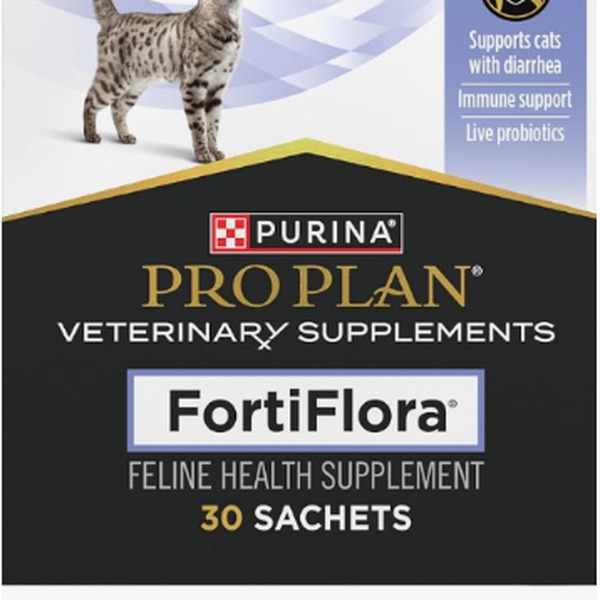
Purina FortiFlora Feline Probiotic Powder (30 packs)
Vet-staple Enterococcus probiotic for firming stool and calming GI upset after diet changes or antibiotics
Cause 5: Grass, Plants, and Self-Induced Clearing
Eat grass, throw up grass — it's so standard it reads like a contract clause. Cats chew grass (and your pothos) for fiber and folate, and the rough leaf material triggers a throw when the stomach contents are bulky. Occasional post-grass vomiting isn't dangerous. A cat grass planter — oat, wheat, or barley — gives the behavior a safe address so your houseplants survive and the episodes stay infrequent. Before you buy, see is cat grass safe? for the full greenery rundown.
Cat Ladies Organic Cat Grass Planter Kit (3 Planters)
Grow oat grass on the windowsill in 5 days — the redirect that saves your monstera and regulates the grass habit

Pet Greens Breezz Self-Watering Cat Grass (Refill Kit)
The zero-effort version: self-watering planter with 3 seed pods, no guessing about soil or light
Cause 6: Foreign Objects, Toxins, and the Serious Stuff
Strings, hair ties, foam earplugs, toy pieces: a linear foreign body is a true emergency — the intestine "saws" itself along the string and requires surgery fast. If your cat has had access to string/craft supplies and is now vomiting and squatting without producing, go tonight.
Lilies are the toxin headline for cats: any ingestion is a same-hour ER trip, full stop (see the toxic foods guide for lilies and the other plants that make the list). And repeated vomiting with increased thirst and urination in a senior cat is the classic opening presentation of kidney disease or hyperthyroidism — exactly the kind of thing a blood panel catches years before a crisis. Chronic vomiting is never "just their personality."
Also on the list of real causes your vet will consider: parasites (kittens and outdoor cats), pancreatitis, IBD, and the big one we don't say out loud often enough — intestinal lymphoma, which is treatable when caught. Recurring vomiting deserves diagnostics, not another flavor of kibble.
Red Flags: Vet Today, Not Monday
- More than 2 vomits in 24 hours, or any vomiting that continues 2+ days
- Blood: bright red streaks or dark "coffee grounds" (digested blood)
- Lethargy + hiding + food refusal — the trio that means this isn't a bowl problem
- Suspected string, toy, or plant ingestion (lilies = the hour, not the day)
- Unproductive retching — heaving with nothing coming up can be nausea, hairline obstruction, or (rarely) an emergency bloat pattern
- Dehydration signs: tacky gums, skin tent that stays, sunken-eyed look
- Kittens, seniors, diabetics, or CKD cats vomiting even once — their reserve is thin
What to Do at Home (the 48-Hour Protocol)
For one obvious, isolated episode in an otherwise normal adult cat:
- Pull food for 12 hours. Never pull water — the fasting rule is about resting the stomach, not dehydration. (Skip the fast entirely for kittens, seniors, and diabetic cats.)
- Bland, small, frequent: a tablespoon of plain boiled chicken or a GI prescription food every 2-3 hours for the first day. Bland diet can be fed 2-3 days if settled.
- Re-introduce gradually: mix regular food into the bland at 25% increments over 3-4 days.
- Fix the mechanics while you're there: swap to the slow-feeder, add the hairball gel once daily during shed season, keep the cat grass trimmed.
- Log it. Date, time, content (food / bile / foam / grass / hair), suspected trigger. Three entries of this log will make your vet visit twice as productive.
What Your Vet Will Actually Do
Expect a physical exam with abdominal palpation, then based on history: fecal float for parasites, bloodwork (kidney, liver, thyroid, glucose), and abdominal imaging — X-ray for objects, ultrasound for wall thickening, masses, and the IBD/lymphoma picture. Bringing a phone photo of the vomit (yes, really) and your episode log moves you from "let's wait and see" to "let's test the right thing" on visit one.
The Prevention Stack (Boring, Works)
| Habit | Why it works |
|---|---|
| Brush 2-3x/week (daily for long-hair) | Hair in the brush is hair that never becomes a hairball |
| Slow-feeder + 4 small meals | Kills the fast-eater vomit category outright |
| 7-10 day transitions on every food change | Keeps the gut microbiome stable |
| Cat grass station, string toys supervised | Redirects grazing; removes foreign-body risk |
| Annual bloodwork after age 7 | Catches kidney/thyroid vomiting years before it becomes a crisis |
Pair this with the rest of the routine in our daily cat care wellness guide and the autumn wellness checklist — seasonal shed spikes are when the hairball and GI-upset calls triple.
Frequently Asked Questions
When is cat vomiting an emergency?
Go to a vet the same day if vomiting happens more than twice in 24 hours, if there is blood (red or coffee-ground material), if your cat is lethargic, hiding, or refusing water, if you suspect a swallowed object, string, or toxin, or if vomiting follows a sudden diet change paired with diarrhea. Kittens, seniors, and diabetic cats dehydrate fast — do not wait them out.
Why is my cat vomiting but acting completely normal?
A cat that vomits then immediately grooms, eats, and plays usually has a mechanical or dietary cause: eating too fast, hairballs, grass, or a sudden food switch. These cases respond to slow-feed bowls, hairball gel, and 7-10 day food transitions within two to three weeks. If normal-acting vomiting keeps happening weekly, still book a workup — chronic intermittent vomiting is never just normal cat behavior.
What do I feed a cat after vomiting?
Remove food for 12 hours (never water), then offer small amounts — a tablespoon every couple of hours — of a bland, familiar food: plain boiled chicken, plain white fish, or a veterinary gastrointestinal prescription. Keep portions small for 48 hours, then re-introduce regular food gradually. If vomiting continues on the bland diet, that itself is the vet-trip signal.
Can I give my cat human anti-nausea medicine?
No. Do not give Pepto-Bismol or aspirin products (toxic to cats), and never dose human anti-emetics without veterinary direction — some, like certain antihistamines, mask symptoms that the vet needs to see. Safe anti-nausea drugs (Cerenia/maropitant) exist but are prescription-only for a reason: dosing depends on the cause.
The Bottom Line
Once or twice a month with a happy cat between episodes: work the mechanical causes — hairball gel, a ceramic slow feeder, slow food transitions, a windowsill grass station. Weekly-or-more vomiting, or any red flag above: that's not a blog question anymore, that's a vet visit with your episode log and a phone photo. Your cat can't file the complaint, so the puddle is the report — read it properly.