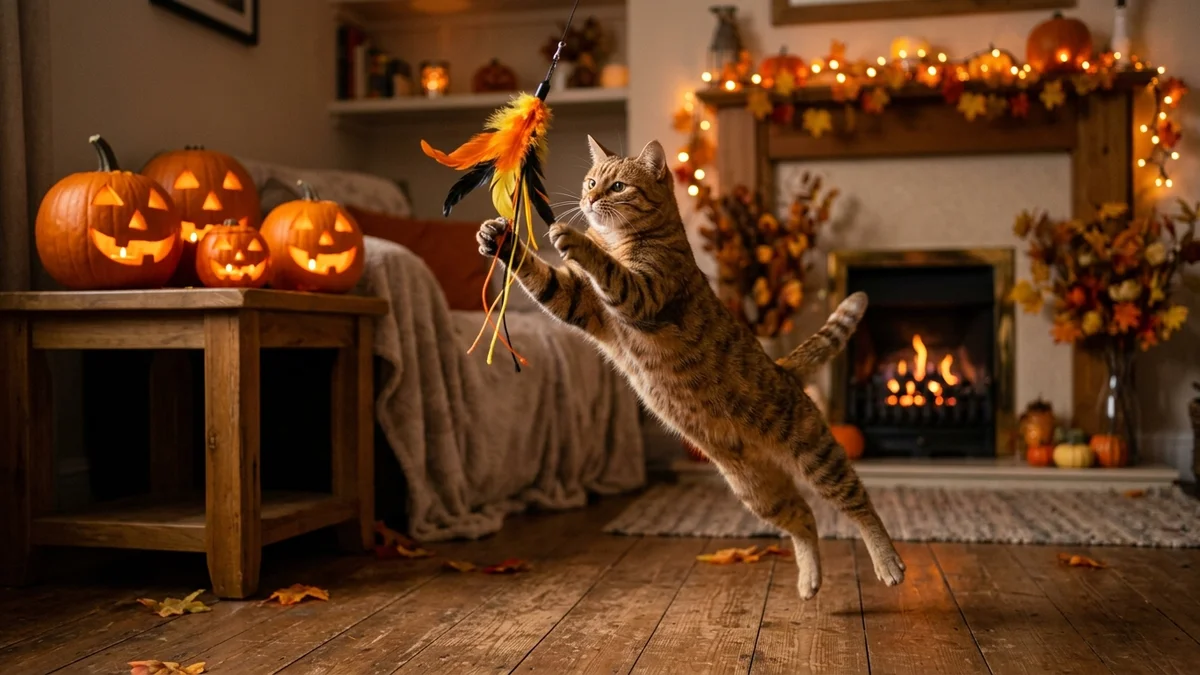
Quick Answer: As autumn temperatures drop and the spooky season arrives, indoor cats naturally slow down, sleep more, and quietly pack on winter weight. Veterinary behaviorists emphasize structured routines, positive reinforcement, and specialized feline environmental enrichment.
Why Indoor Cats Need Structured Exercise
Wild and feral cats spend six to eight hours each day stalking, sprinting, climbing, and pouncing on prey. Your indoor cat—no matter how pampered—carries the same predatory neurology and muscular system. Without structured physical outlets, that pent-up energy manifests as destructive scratching, explosive 3 AM zoomies, stress-driven overeating, and progressive obesity.
According to the Association for Pet Obesity Prevention, an estimated 61% of domestic cats in the United States are classified as clinically overweight or obese. Excess weight in cats is not merely cosmetic; it dramatically increases risk of feline diabetes mellitus, osteoarthritis, hepatic lipidosis (fatty liver disease), and lower urinary tract disease. Structured daily exercise is the single most effective non-dietary intervention veterinarians recommend.
How Much Exercise Does a Cat Actually Need?
Veterinary behaviorists recommend a minimum of 15 to 30 minutes of active, heart-rate-elevating play per day for healthy adult cats. The critical insight is that cats are crepuscular predators—they operate in intense short bursts, not sustained long-distance endurance. Splitting exercise into two or three daily micro-sessions of 5 to 10 minutes perfectly mirrors the natural hunt-rest-hunt cycle and prevents physical exhaustion and behavioral frustration.
For the routines below, aim for two dedicated sessions: one in the early morning (around 6 to 8 AM) and one in the early evening (around 6 to 9 PM), aligning with your cat’s biological peak energy windows. This scheduling can dramatically reduce disruptive nighttime zoomies and anxiety-driven behaviors.
The 10 Indoor Cat Exercise Routines
1. The “Prey-Sprint” Interval Circuit
This is the most effective single routine for burning maximum calories in minimum time. Use a feather wand or ribbon teaser to simulate a fleeing mouse or bird. Drag the lure across the floor in short, erratic zigzag bursts to trigger your cat’s hardwired prey-chase reflex.
Protocol: 1 to 2 minutes of intense sprinting and lunging, followed by 1 to 2 minutes of slow, creeping lure movement (simulating injured prey) for active recovery. Repeat the high-low cycle 3 to 5 times. Total session: 8 to 15 minutes. Always let your cat catch and bite the lure every third or fourth attempt to deliver the neurological dopamine reward of a successful kill.
2. The “Jack-o’-Lantern” Cardboard Box Agility Maze
Cats already love cardboard boxes (here’s the science behind it), so build on that instinct. Collect 4 to 6 shipping boxes and arrange them in a maze formation across your living room floor. Cut peek-a-boo holes in the sides large enough for your cat to squeeze through, and scatter crinkle balls or lightweight felt mice inside the tunnels.
Halloween twist: Cut jack-o’-lantern face shapes into the boxes and place a small LED tea light behind each cutout. The flickering light through the carved holes creates irresistible moving shadows that stimulate your cat’s predatory curiosity.
3. The Staircase “Haunted” Climb
If your home has carpeted stairs, you are sitting on the single most effective feline cardio machine in existence. Toss a lightweight crinkle ball or soft felt mouse to the top of the staircase, let your cat sprint up to retrieve it, then toss another one to the bottom. The vertical ascent engages the powerful posterior chain muscles (hamstrings, glutes, and spinal extensors) that horizontal floor running alone cannot activate.
Protocol: 5 to 8 vertical laps with 30-second rest intervals between each pair. Watch for open-mouth panting—if your cat pants with an open mouth, stop immediately and provide fresh water. Cats do not thermoregulate through panting the way dogs do; open-mouth breathing in cats signals genuine cardiovascular stress.
 Best Halloween Kicker
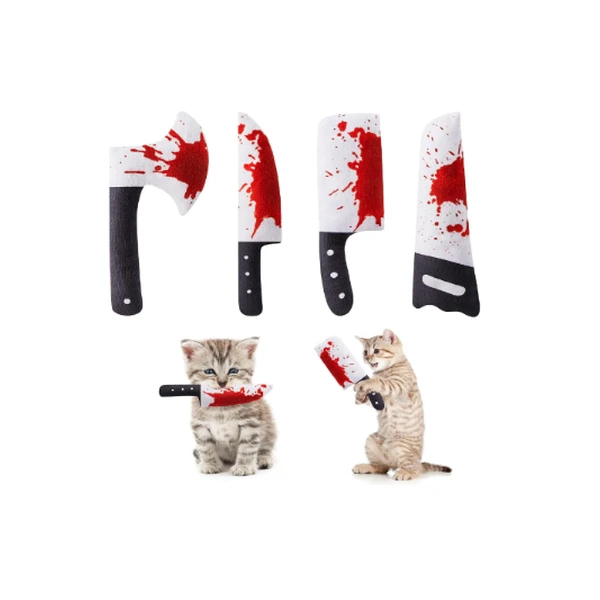
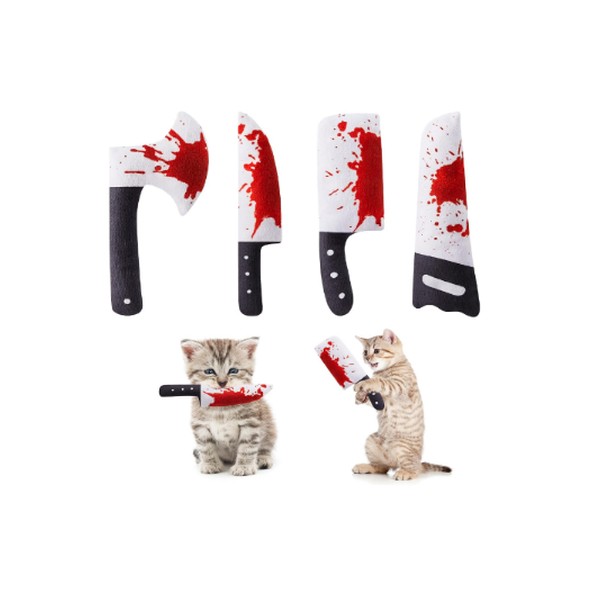
Potaroma 4PCS Horror Knife Catnip Kicker Toys
Perfect for the “Midnight Kicker” wrestling routine below. These plush horror-themed knife kickers are packed with premium North American catnip and silvervine, giving your cat a satisfying bunny-kick target that drains pre-bedtime adrenaline and channels predatory energy into safe play.
Check Price on Amazon →4. The Spooky Scavenger Hunt (Foraging Circuit)
In the wild, cats eat 10 to 20 small meals throughout the day, each preceded by a stalk-and-pounce sequence. Replicate this by hiding 8 to 12 individual kibble pieces or small crunchy treats across your home—on windowsills, beneath sofa cushion edges, inside cardboard tubes, on cat tree platforms, and inside crinkle tunnels.
Halloween twist: Use small plastic pumpkin containers or miniature cauldrons as treat vessels. Your cat must knock each pumpkin over to release the hidden reward, combining physical nose-nudging effort with cognitive problem-solving.
Scavenger hunts are particularly valuable for overweight cats on calorie-restricted diets. Rather than dumping the full daily kibble portion into a bowl, distribute it across 10 to 15 hidden locations. This transforms passive eating into active foraging, extending mealtime from 45 seconds to 20 or 30 minutes while burning significant calories.
5. Precision Laser Sprint & Catch
Laser pointers provide extraordinary cardiovascular exercise because the unpredictable moving dot triggers your cat’s deepest predatory tracking instincts. However, laser play has one critical caveat: the dot is uncatchable. Without a tangible reward, repeated unsuccessful hunts can trigger predatory frustration syndrome, leading to obsessive carpet-staring, tail-chasing, and anxiety-driven behaviors.
The safe protocol: Guide the laser dot in wide arcs and zigzags for 2 to 3 minutes of intense sprinting. Then, without your cat seeing, guide the dot directly onto a physical toy or treat lying on the floor. When the laser “lands” on the treat, click the pointer off. Your cat pounces, catches the treat, and receives the complete neurological satisfaction of a successful hunt. End every session this way.
 Best Interactive Laser
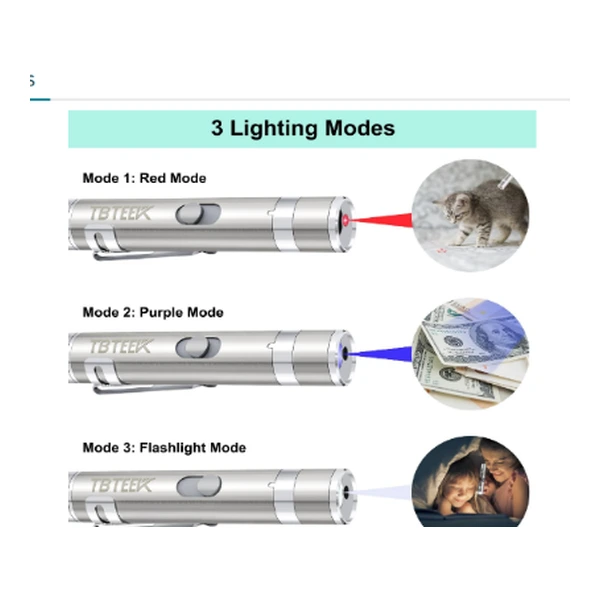
TBTeek Rechargeable Interactive Laser Pointer
USB-C rechargeable with multiple beam patterns that create unpredictable movement, forcing your cat to sprint, pivot, and leap in irregular intervals. The focused red dot is eye-safe and visible even in dimly lit rooms—ideal for atmospheric Halloween evening play sessions by firelight.
Check Price on Amazon →6. The “Shadow Prowl” Wand Workout
Unlike open-floor wand chasing, the shadow prowl specifically targets core jumping muscles and explosive vertical power. Drag a feather lure or ribbon wand beneath furniture skirts, around dark corners, under sofa cushion overhangs, and behind door frames. The partial concealment of the prey target forces your cat to crouch low, engage their abdominal stabilizers, and launch explosive upward or sideways pounces rather than flat sprints.
This routine is particularly effective during early evening when natural lighting fades, creating genuine shadows that enhance the hunting atmosphere. Pair it with smart home ambient lighting set to warm amber tones for the full autumn experience.
7. Vertical Cat Tree & Perch Circuit
Vertical climbing engages fundamentally different muscle groups than horizontal running. When a cat leaps from the floor to a 4-foot platform, they perform the feline equivalent of a plyometric box jump, activating fast-twitch muscle fibers in the hindquarters, spinal extensors, and shoulder girdle simultaneously. Multi-level cat trees transform passive furniture into dynamic workout stations.
Protocol: Dangle a feather wand at the highest platform, luring your cat to climb. Once they reach the top, relocate the lure to the base. Repeat the full ascent-descent cycle 4 to 6 times. For cats comfortable with heights, window perches add the bonus of bird-watching stimulation between climbing sets.
8. The Breakfast Puzzle Feeder Challenge
Puzzle feeders are the single most underrated indoor cat exercise tool because they combine physical effort with cognitive load. Instead of pouring your cat’s morning kibble into a traditional bowl, serve it inside a maze feeder that requires nudging, sliding, and pawing to release individual pieces.
Research published in the Journal of Feline Medicine and Surgery found that cats switched from free-feeding bowls to puzzle feeders showed measurable reductions in body weight, problem behaviors, and nighttime activity disruption within 6 to 8 weeks, while displaying increased environmental exploration and confident posture.
9. Cat Exercise Wheel Training
Exercise wheels are the gold standard for high-energy breeds like Bengals, Abyssinians, Savannahs, and Siamese who need more cardio than typical interactive play can deliver. A quality exercise wheel allows sustained running at the cat’s chosen pace, and many owners report their cats voluntarily using wheels for 20 to 40 minutes daily once properly trained.
Training protocol: Begin by placing high-value treats on the stationary wheel surface. Let your cat explore at their own pace for several days. Then, hold a wand toy just ahead of them on the wheel to encourage slow walking, rewarding each few steps with a treat. Over 2 to 4 weeks, most cats learn to run independently. Patience is critical—never force or place a reluctant cat on a moving wheel.

 Best Exercise Reward
Bonkers Purrpops Halloween Chicken Cat Treats
Low-calorie, high-protein chicken popsicle treats in spooky Halloween packaging. Perfect for rewarding cats at the end of laser chase sessions, scavenger hunts, and exercise wheel training. The lickable format slows consumption and extends the reward experience without adding significant calories to your cat’s daily intake.
Check Price on Amazon →10. The “Midnight Kicker” Wrestling Match
This is your secret weapon against disruptive nighttime energy bursts. Twenty to thirty minutes before your own bedtime, present your cat with a large, sturdy catnip kicker toy. Cats instinctively grab kicker toys with their front paws and deliver rapid-fire bunny kicks with their powerful hind legs—the same explosive motion used to disembowel prey in the wild.
A vigorous 5 to 8 minute kicker session burns significant energy, triggers a post-exercise dopamine crash, and channels your cat’s final burst of crepuscular hunting instinct into a safe, controlled outlet. The result: your cat settles into deep sleep within minutes, and your own night is blissfully free of 3 AM zoomie interruptions.
Building a Weekly Routine Schedule
Consistency is far more important than intensity. Here is a veterinarian-recommended weekly framework that rotates all 10 routines while preventing monotony:
| Day | Morning Session (6–8 AM) | Evening Session (6–9 PM) |
|---|---|---|
| Monday | Prey-Sprint Intervals (10 min) | Midnight Kicker (8 min) |
| Tuesday | Puzzle Feeder Breakfast | Shadow Prowl Wand (10 min) |
| Wednesday | Scavenger Hunt (15 min) | Cat Tree Circuit (10 min) |
| Thursday | Staircase Climb (8 min) | Laser Sprint & Catch (8 min) |
| Friday | Box Maze Agility (12 min) | Midnight Kicker (8 min) |
| Saturday | Puzzle Feeder + Scavenger Hunt | Prey-Sprint Intervals (12 min) |
| Sunday | Exercise Wheel (free access) | Shadow Prowl + Kicker (15 min) |
Safety Guidelines for Indoor Cat Exercise
- Watch for open-mouth panting. Cats do not thermoregulate through panting. If your cat begins breathing with an open mouth, stop the session immediately, provide fresh water, and let them rest in a cool area.
- Avoid exercise after large meals. Wait at least 30 minutes after a full meal before vigorous play to prevent gastric discomfort.
- Rotate toys weekly. Rotating toys maintains novelty and prey-drive engagement. Store 3 to 4 toys in a sealed bag with catnip for a week, then swap them back in.
- Supervise laser play. Never shine a laser pointer directly into your cat’s eyes. Always guide the dot to a physical treat or toy at the end of each session.
- Check for ingested materials. Replace string, ribbon, or feather toys showing wear. Ingested string is a veterinary emergency that can cause life-threatening intestinal linear foreign body obstruction.
- Hydrate. Place a fresh water fountain near the exercise area. Active cats need approximately 50 to 60 mL of water per kilogram of body weight daily.
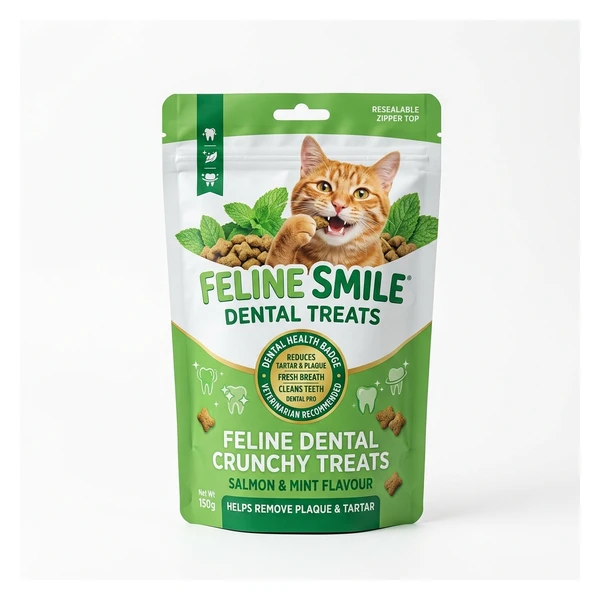 Best Post-Workout Reward
FELINE GREENIES Dental Treats (Catnip Flavor)
VOHC-accepted crunchy dental treats that serve double duty: rewarding your cat after an exercise session while mechanically scrubbing plaque and tartar. The natural catnip flavor creates a positive association between physical activity and delicious payoff, reinforcing daily exercise habits.
Check Price on Amazon →Signs Your Cat Is Getting Enough Exercise
How do you know your indoor exercise program is working? Look for these five veterinary indicators of a well-exercised cat:
- Visible waistline. When viewed from above, a healthy-weight cat shows a gentle hourglass taper behind the ribs.
- Reduced nighttime zoomies. A properly exercised cat sleeps deeply through the night rather than launching chaotic sprinting episodes.
- Healthy appetite regulation. Cats that exercise appropriately eat their meals consistently rather than binge-eating or refusing food.
- Confident body language. Active cats display upright tail carriage, relaxed whiskers, and eager engagement when toys appear, rather than hiding or withdrawing.
- Healthy coat and grooming. Exercise improves circulation, which promotes healthy coat condition and reduces excessive shedding.
Frequently Asked Questions
How much exercise does an indoor cat need per day?
Veterinarians recommend a minimum of 15 to 30 minutes of active, heart-rate-elevating play per day for adult indoor cats. Splitting this into two or three short sessions of 5 to 10 minutes each mimics the natural hunt-rest-hunt cycle and prevents exhaustion.
Can older or overweight cats do these exercise routines safely?
Yes, but start slowly. For senior cats or those carrying extra weight, begin with 2 to 3 minutes of gentle wand play and puzzle feeders. Gradually increase the duration over several weeks as stamina improves. Always consult your veterinarian before starting an exercise program for cats with age-related conditions or diabetes.
Are laser pointers safe for cat exercise?
Laser pointers are safe when used correctly. The critical rule is to always end each laser session by guiding the dot onto a physical toy or treat that your cat can catch and bite. Without a tangible reward, the uncatchable dot can trigger predatory frustration and obsessive compulsive behaviors over time.
What is the best time of day to exercise an indoor cat?
Cats are crepuscular, meaning they are naturally most active during dawn and dusk. Scheduling exercise sessions around 6 to 8 AM and 6 to 9 PM aligns with their biological peak energy windows and can dramatically reduce disruptive 3 AM zoomies.
Keep Your Cat Fit This Fall
Indoor cats thrive when their environment delivers the physical and mental challenges their predatory brains crave. You do not need expensive equipment or hours of free time—just 15 to 30 minutes split across two daily sessions, a feather wand, some cardboard boxes, and a handful of treats is enough to transform a sedentary, overweight housecat into a lean, confident, and deeply contented companion.
This Halloween season, channel your cat’s inner hunter with pumpkin-carved box mazes, spooky scavenger hunts, and atmospheric shadow-prowl sessions. Your cat will be fitter, calmer, and healthier—and you will finally get to sleep through the night without a furry alarm clock launching off your pillow at 3 AM.