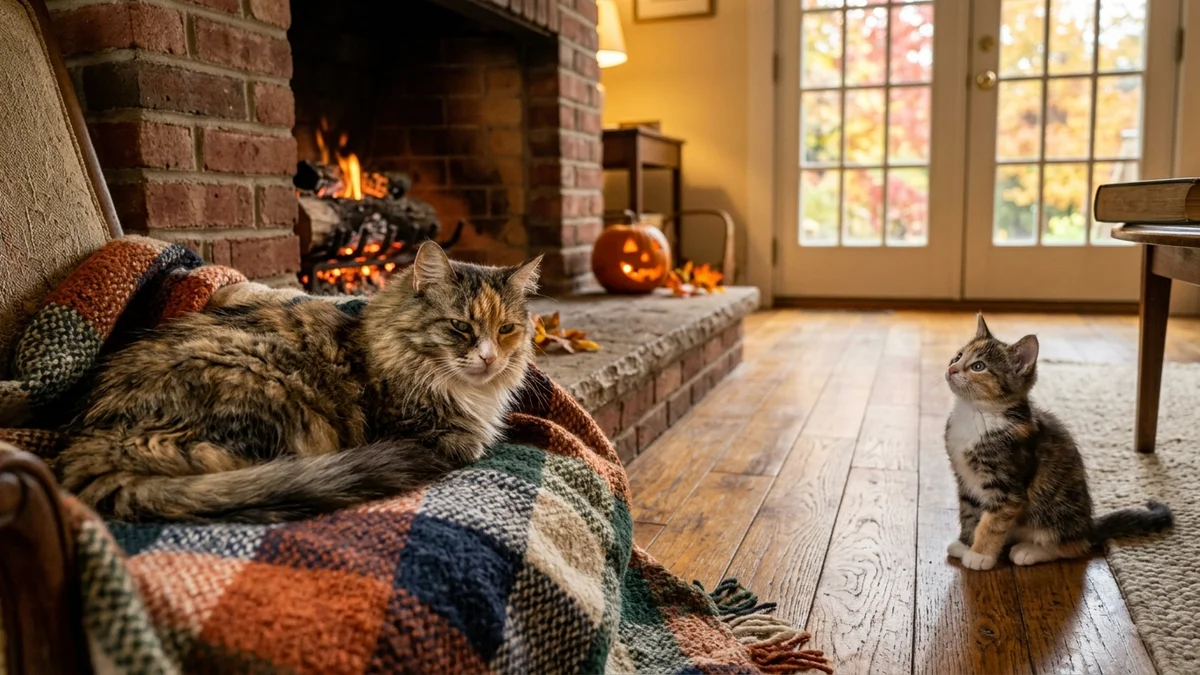
Quick Answer: Bringing a bouncy, hyperactive kitten into a home ruled by a dignified, arthritic senior cat is like dropping a rambunctious toddler into the quiet retirement villa of a venerable professor. Veterinary behaviorists emphasize structured routines, positive reinforcement, and specialized feline environmental enrichment.
The Biological Clash: Boundless Energy vs. Fragile Dignity
Adopting a new kitten during the vibrant autumn months is one of pet ownership’s greatest joys. But when you already share your life with an elderly cat (felines aged 10 to 18+ years), introducing a new kitten is not merely a social novelty—it is a major physiological shock.
Senior cats thrive on rigid predictability, peaceful silence, and established territorial sovereignty. Over 90% of cats over 12 years old suffer from feline degenerative joint disease (osteoarthritis), causing chronic hip and spine pain that humans rarely detect. Their sensory faculties—hearing, peripheral eyesight, and smell—are naturally dulled. An unannounced, full-speed pounce from an exuberant kitten does not feel like play to a senior cat; it feels like an agonizing physical assault.
Meanwhile, kittens under six months old are motor-driven bundle of predatory reflexes with zero social etiquette. They lack the emotional maturity to interpret feline body language cues, cheerfully bounding toward a senior cat whose flattened ears, twitching tail, and low growls clearly scream: "Back off!"
Why Autumn & Halloween Complicate Feline Introductions
Late October creates a perfect storm of environmental chaos that can easily derail an otherwise sound introduction protocol:
- Halloween Sensory Chaos: Chattering trick-or-treaters at the front door, incessant doorbells, loud thumps, and uncanny costumes induce acute feline stress. If your senior cat is already on high alert from external commotion, their tolerance for a rowdy kitten evaporates instantly (read our guide on decoding feline anxiety triggers).
- Autumn Drafts & Joint Stiffness: Cold autumn snaps stiffen arthritic joints, making senior cats more irritable and defensive.
- Territorial Bottlenecks: If festive decorations or closed seasonal storm doors alter regular home pathways, cats feel restricted, increasing territorial friction around litter boxes and feeding stations (master multi-cat litter box placement here).
To successfully integrate two cats across a decade-wide age gap, you must discard the archaic myth of "letting them fight it out." Instead, follow this structured, evidence-based 7-step protocol.
The 7-Step Protocol for Introducing a Kitten to an Elderly Cat
Step 1: The Sanctuary Quarantine (Days 1 to 3)
Never allow the new kitten to roam freely upon arrival. The kitten must immediately be escorted into a fully dedicated "Sanctuary Room" (such as a spare bedroom or home office) with the door firmly closed. This room must be fully equipped with its own food, water fountain, scratching post, toys, and dedicated litter box.
This strict sensory isolation accomplishes two non-negotiable goals: it allows the kitten to decompress from adoption travel, and it prevents your senior resident cat from feeling that their core territory has been invaded overnight. During these first three days, there should be zero visual or physical contact between the two animals.
Step 2: Scent Swapping & Olfactory Integration (Days 4 to 7)
Cats do not identify friends by appearance; they identify them through complex communal scents. Before the cats ever see each other, their scents must be gently merged.
Rub a soft cotton hand towel along the kitten’s cheeks, chin, and forehead (where feline facial pheromones reside). Place this scented towel underneath your senior cat’s food dish. Repeat the process with a towel rubbed on your senior cat, placing it in the kitten’s room. By pairing the newcomer’s unfamiliar scent with the dopamine release of mealtime, both cats subconsciously learn that the other’s aroma predicts safety and pleasure.
 Best Scent-Integration Tool
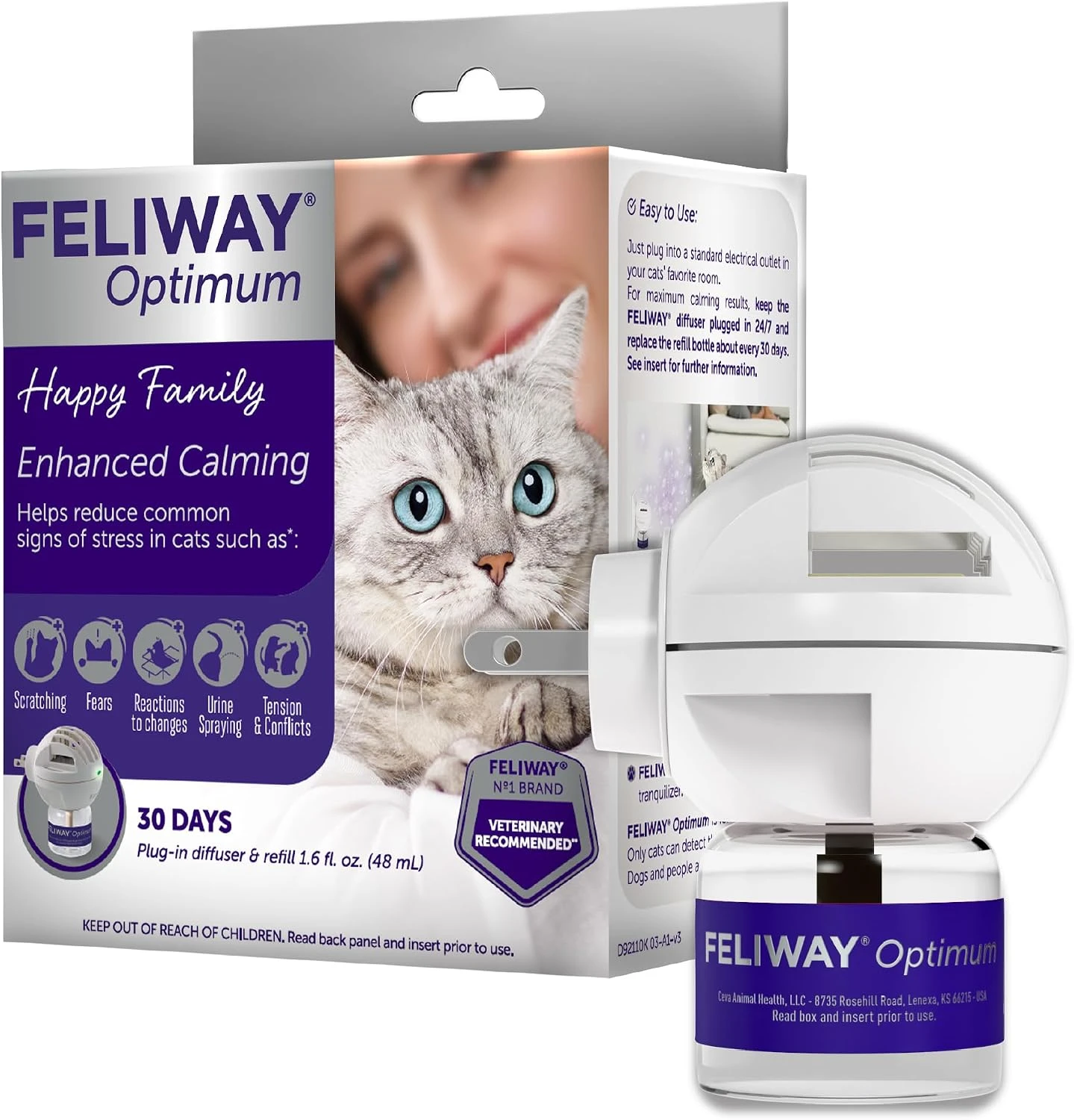
FELIWAY Optimum Cat Calming Diffuser Kit
An indispensable tool for multi-cat introductions. Plugged into the central hallway connecting the kitten’s nursery to the senior cat’s domain, this advanced pheromone complex releases calming messages that soothe territorial tension and prevent defensive hissing during scent exchange.
Check Price on Amazon → Best Scent Exchange Station
Hide & Scratch Cardboard Cat Scratcher Bed
Cats leave vital interdigital pheromones when scratching. Swapping this enclosed cardboard scratcher bed between rooms allows each cat to thoroughly inspect and scent-mark without physical interaction (learn why cardboard creates secure feline environments).
Check Price on Amazon →Step 3: Territory Site Swapping (Days 8 to 11)
Once both cats show neutral body language toward scent towels, initiate physical site swaps. Confine the senior cat inside a cozy master bedroom, and allow the kitten 30 minutes to explore the main living area. Simultaneously, guide your senior cat into the kitten’s nursery room.
This allows your senior cat to inspect the kitten’s scent-dense bedding, litter box, and toys in total peace, without feeling pressured to defend itself from a moving target. If your senior cat calmly sniffs and moves on without puffing their tail, they are developing emotional neutrality.
Step 4: Feeding on Opposite Sides of a Closed Door
Place feeding dishes on both sides of the closed nursery door, roughly three feet back from the threshold. As both cats eat, they can hear muffled chewing and smell each other beneath the door gap, associating the other’s proximate presence with delicious food.
Over several days, gradually inch the food bowls closer to the door until both cats eat comfortably just inches apart through the solid wood barrier without hissing or backing away.
Step 5: The Visual Barrier Stage (Days 12 to 18)
Now comes the pivotal transition: sight without physical contact. Open the solid door and replace it with a double-stacked baby gate, a pet safety screen door, or a sturdy wire playpen barrier.
Allow the cats to see each other for 5 to 10 minutes at a time while you actively reward them with high-value treats whenever they look at each other calmly.
 Best Positive Reinforcement Treat
FELINE GREENIES Dental Treats (Catnip Flavor)
Irresistibly aromatic and crunchy. Handing these treats to your senior cat the precise second they view the kitten through the gate forms an immediate neurological association: "Seeing this little creature brings me delicious treats!"
Check Price on Amazon →If either cat fixes an unblinking, predator-style stare or begins growling, calmly drape a towel over the gate to break eye contact, then increase the distance between them. Never punish a cat for growling—growling is honest communication.
Step 6: Supervised Physical Meetings & Energy Draining (Days 19 to 25)
Before allowing the kitten and senior cat into the same room without a barrier, you must execute the Energy Drain Protocol. Engage the kitten in 20 minutes of intense aerobic wand toy play (try our indoor cat exercise routines) until the kitten is panting and ready for a nap.
Bring the calm, tired kitten into the living room while keeping the session short (10 to 15 minutes). Keep a large piece of sturdy cardboard or a thick throw blanket in your hands. If the kitten charges toward the elderly cat, gently slip the cardboard barrier between them to redirect the kitten’s path without using your hands or yelling.
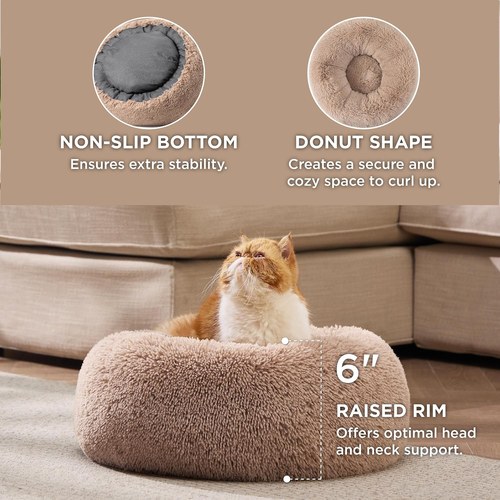 Best Senior Cat Sanctuary Bed
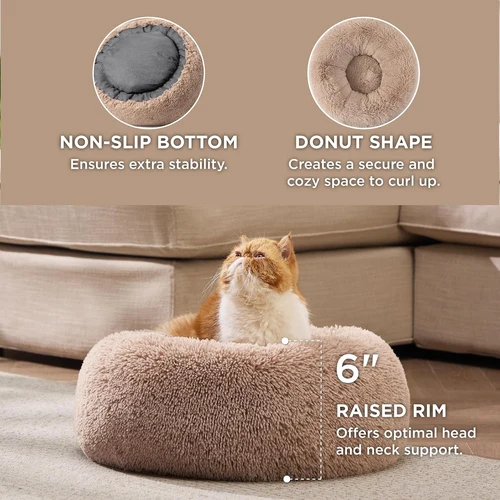
Bedsure Calming Donut Cat Bed (20-Inch)
Senior cats need an unassailable sanctuary. Placing this ultra-plush, orthopedic donut bed on a sturdy elevated table gives your older cat a luxurious, warm vantage point to observe household life safely out of reach of kitten pounces.
Check Price on Amazon →Step 7: Full Integration & Lifelong Territory Management
Gradually increase the duration of supervised co-existence sessions. Maintain independent litter boxes—preferably automated units like the PETKIT PuraMax 2 or Litter-Robot 4 that instantly clean waste between visits, preventing territorial friction over soiled litter. Continue feeding both cats in separate locations indefinitely to avoid food aggression.
The 3-3-3 Rule for Introducing a Kitten to an Elderly Cat
| Phase | Duration | Senior Cat Response | Primary Goal |
|---|---|---|---|
| Decompression | First 3 Days | Sniffing under doors, slight vigilance | Zero physical contact; complete territorial security |
| Routine Learning | Next 3 Weeks | Occasional warning hiss, calm eating near gate | Visual habituation, scent merging, barrier feeding |
| Mutual Respect | 3 Months | Relaxed posture, co-sleeping on furniture | Peaceful co-existence, shared household harmony |
Healthy Boundary Setting vs. Dangerous Aggression
Many cat owners panic the first time an elderly cat hisses at an innocent kitten. However, distinguishing between normal boundary enforcement and dangerous aggression is vital:
- Normal Boundary Enforcement (Do Not Intervene): A brief hiss, a low warning growl, or a swift swat with retracted paws when the kitten gets too close. This is healthy feline communication teaching the kitten manners. Intervening here prevents the kitten from learning social boundaries.
- Dangerous Red-Zone Aggression (Intervene Immediately): Unblinking, silent stalking; lunging with claws fully extended; cornering the kitten against a wall; piercing shrieks, screaming, and rolling fur-flying brawls. If this occurs, immediately throw a blanket over the aggressor or insert a cardboard barrier, separate the cats, and return to the visual barrier phase for another week.
Frequently Asked Questions
How long does it take for a senior cat to accept a new kitten?
On average, it takes between 2 to 8 weeks for a senior cat to tolerate or accept a new kitten. Following the 3-3-3 rule (3 days to decompress, 3 weeks to establish routines, 3 months to build mutual respect) ensures a gradual transition without traumatic fighting.
Is it normal for my older cat to hiss and growl at the new kitten?
Yes. Mild hissing, low growling, and swatting without claws are completely normal boundary-setting behaviors. Senior cats use vocalizations to communicate 'keep your distance.' As long as the senior cat is not cornering, stalking, or actively attacking with claws extended, mild hissing should be respected as healthy feline boundary instruction.
How can I protect my senior cat's arthritic joints from rough kitten play?
Provide elevated, gated sanctuary zones and dedicated high-bolster orthopedic beds where your elderly cat can rest out of reach of the kitten. Thoroughly drain the kitten's physical energy with active wand toys and laser play sessions before any supervised interaction.
Why do introductions become more stressful around Halloween and fall?
October brings intense sensory disruptions—frequent doorbell ringing from trick-or-treaters, visitors in eerie costumes, and howling autumn windstorms. These environmental stressors elevate your senior cat's cortisol levels, making them far more defensive and prone to redirecting fear into aggression toward a new kitten.
Lifelong Feline Companionship Takes Patience
Your elderly cat has dedicated a decade or more to loving and trusting you. Introducing a spirited new kitten requires honouring your senior cat’s physical limitations, dignity, and established space.
By protecting your older cat with calm sanctuary zones, taking scent swapping slowly, draining the kitten’s energy with dedicated play, and rewarding every calm glance with delicious treats, you lay the foundation for a peaceful multi-cat home. When autumn leaves swirl outside and your two cats curl up together by the warm hearth, you will know every single patient step was worth it.