Quick Answer: For centuries, felines have been misunderstood as aloof, transactional loners who only care about who opens the food can. Veterinary behaviorists emphasize structured routines, positive reinforcement, and specialized feline environmental enrichment.
VETERINARY RESEARCH SUMMARY
Do cats really feel love? Yes. Landmark behavioral studies from Oregon State University confirm that 64% of domestic cats demonstrate secure attachment bonds with their primary caregivers—an attachment rate virtually identical to human infants and dogs. When cats interact affectionately with trusted humans, both cat and human experience significant surges in oxytocin (the neurochemical hormone of maternal bonding and love).
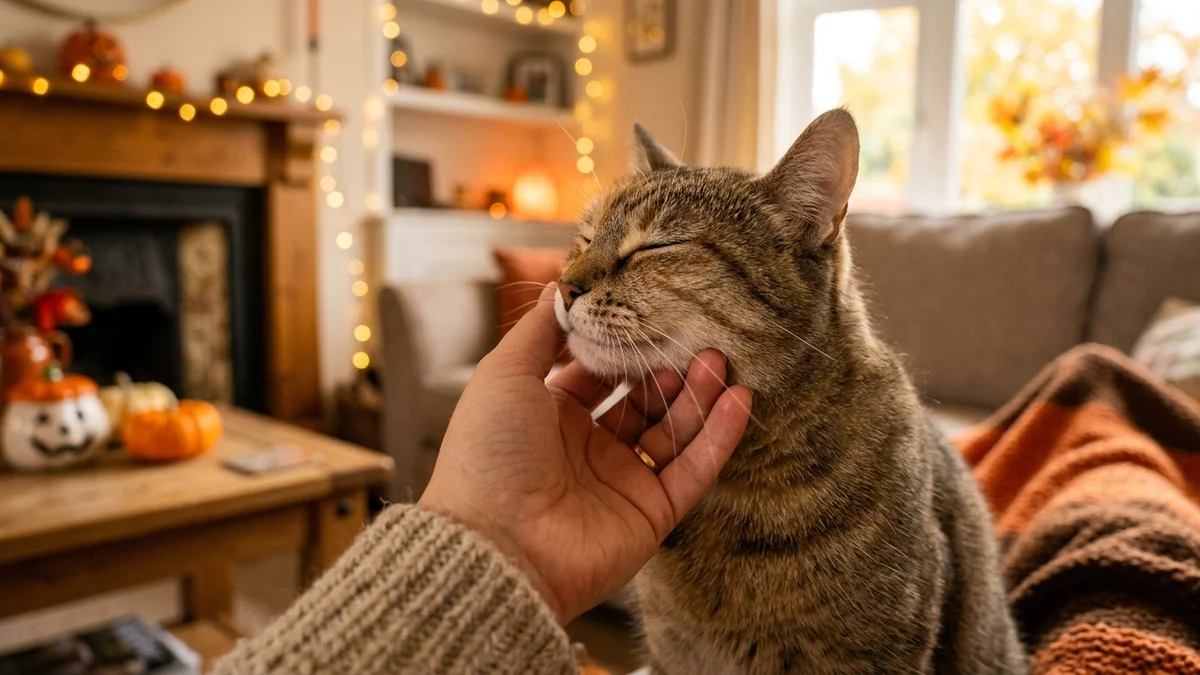
Every cat parent has experienced that quiet, magical autumn evening: you are curled on the couch under a warm blanket, ambient fairy lights glow against the mantle, and your feline saunters over, hops onto your lap, and leans their forehead firmly against your cheek with a deep, rumbling purr.
Yet popular culture stubbornly perpetuates the myth that cats are cold, indifferent opportunists who view humans merely as automated treat dispensers. Dog lovers often contrast canine tail-wagging exuberance with feline reserve. But judging a cat's affection through a canine lens is like trying to read French using Spanish grammar: felines speak an entirely different dialect of devotion.
Over the past decade, veterinary ethologists and animal cognitive scientists have dismantled the "aloof cat" myth. The verdict is indisputable: cats form profound, enduring emotional attachments to their human families. Here is the fascinating science behind feline devotion, accompanied by the 10 subtle, veterinary-backed behavioral signs that prove your cat loves you deeply.
The Scientific Evidence: How Science Proved Feline Love
1. The Landmark Oregon State Attachment Study
In 2019, Dr. Kristyn Vitale and her team at the Human-Animal Interaction Lab at Oregon State University conducted a groundbreaking trial utilizing the Ainsworth Strange Situation Test—the gold-standard psychological assessment used for decades to evaluate human infant-parent bonds.
In the experiment, kittens and adult cats were placed in an unfamiliar room with their primary caregiver for two minutes, followed by a two-minute isolation period, and finally a two-minute reunion. The results astonished researchers:
- 64.3% of cats demonstrated Secure Attachment: When their owner returned, these cats greeted them with warm, relaxed body language and used their owner as a secure base of comfort before confidently exploring the new environment.
- 35.7% demonstrated Insecure Attachment: Showing anxious avoidance or excessive ambivalence.
Remarkably, this 64% secure attachment rate mirrors the human infant secure attachment rate (65%) and slightly surpasses the canine attachment rate (58%). This proves that domestic felines perceive their primary human caregiver not merely as a food provider, but as a biological anchor of psychological safety.
2. The Neurochemistry of the Oxytocin Loop
Love is not just an abstract concept; it is an evolutionary neurochemical phenomenon driven by oxytocin—frequently dubbed the "cuddle hormone." In humans, oxytocin surges during childbirth, nursing, and intimate eye contact.
Neuroscience research shows that when you gently stroke your cat in their preferred scent zones (beneath the chin, along the cheek glands, and behind the ears), both human and feline bloodstreams experience an immediate spike in oxytocin, accompanied by measurable reductions in cortisol (stress hormone) and resting blood pressure. Feline love is physiologically tangible.
 Best Safe Haven for Loving Cats
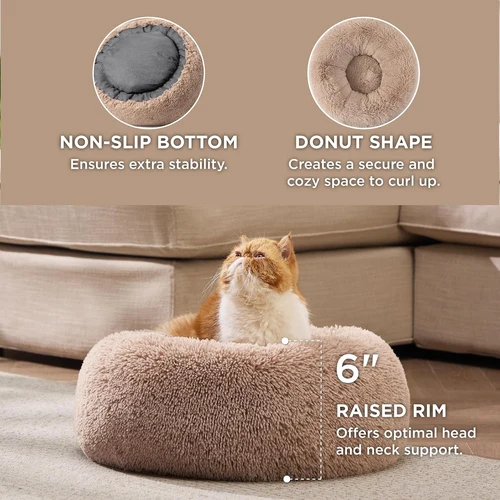
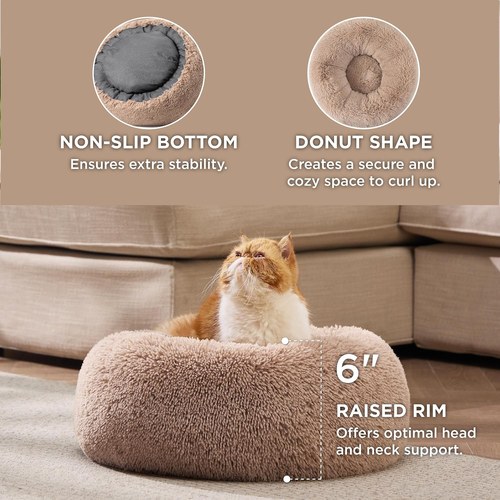
Bedsure Calming Donut Cat Bed (20-Inch)
Cats express love most freely when their environment feels secure. This deep circular donut bed features raised supportive bolsters and ultra-plush faux shag that mimics the warmth of resting beside a trusted human caregiver, easing separation anxiety when you are away from home.
Check Price on Amazon →10 Science-Backed Signs Your Cat Truly Loves You
1. Head Bunting & Cheek Rubbing (Allorubbing)
When your cat marches toward you and firmly pushes the top of their head or cheek against your shin, hand, or forehead, they are performing a high-order social bonding ritual termed allorubbing.
Felines possess specialized sebaceous scent glands concentrated around their lips, cheeks, chin, and temples that secrete unique pheromones. By rubbing these glands against you, your cat is effectively scent-marking you as part of their inner family clan. In the wild, pride members mingle their scents to create a unified "colony scent." When your cat bunts you, they are declaring: "You belong to me, and I belong to you."
2. The Slow Blink: The Feline 'I Love You'
In predatory biology, unblinking direct eye contact is an aggressive challenge or predatory focus. When your cat looks into your eyes from across the living room and slowly, deliberately closes their eyelids before reopening them, they are sending the ultimate feline message of vulnerability and affection.
A 2020 study published in Scientific Reports by the University of Sussex demonstrated that cats are significantly more likely to slow-blink back at humans who slow-blink at them, and are much more inclined to approach an outstretched human hand following this exchange. It is the feline equivalent of a warm, reassuring smile.
3. The Upright Question-Mark Tail Greeting
A cat's tail is an expressive barometer of their emotional state. A lashing tail signals overstimulation, while a tucked tail conveys fear. However, when your cat approaches you with their tail held straight up in the air, with the tip softly curved into a delicate question-mark hook, veterinary ethologists recognize this as the universal feline greeting of joy, trust, and friendly intent.
 Best Bonding Reward
FELINE GREENIES Dental Treats (Catnip Flavor)
Sharing positive daily reward rituals reinforces feline trust and affection. These crunchy, VOHC-accepted dental treats offer a healthy burst of natural catnip aroma, allowing you to hand-feed your cat and deepen your emotional bond while cleaning teeth and freshening breath.
Check Price on Amazon →4. Purring in Close Physical Proximity
While cats occasionally purr to self-soothe when injured or frightened, a rhythmic, deep purr accompanied by relaxed whiskers and a soft body while curling beside you is a clear declaration of contentment. Kittens are born blind and deaf, communicating with their mother through vibrational purrs during nursing. When an adult cat purrs while touching your body, they are reverting to that primal state of complete maternal safety.
5. Exposing the Vulnerable Belly
A cat's abdomen houses their most delicate, vital organs. In feline body language, lying flat on the back with all four paws tucked up and the soft belly exposed is an extraordinary sign of psychological trust. It signifies that your cat feels so completely safe in your presence that they do not feel the need to guard their most vulnerable physical anatomy.
Caution: An exposed belly is an invitation of trust, not always an invitation for vigorous tummy rubs! Many cats will instinctively reflexively swat if you grab their belly; respect their trust by gently stroking their chin instead.
6. Rhythmic Kneading ('Making Biscuits')
Does your cat climb onto your lap or chest and rhythmically push their front paws in and out against your sweater? As detailed in our comprehensive guide on why cats knead blankets and owners, this instinctual motion originates in the nursing nest, where kittens knead their mother's mammary glands to stimulate milk flow.
Adult cats retain this behavior exclusively for moments of supreme emotional comfort. When your cat kneads you, their brain is flooding with comforting neurochemicals, regarding you as their primary maternal protector.

 Best Festive Reward
Bonkers Purrpops Halloween Chicken Cat Treats
Celebrate the spooky season together with these limited-edition crispy-shell cat treats. High in protein and crafted with wholesome chicken, they provide the perfect loving bedtime ritual after an evening of autumn cuddles.
Check Price on Amazon →7. Sleeping Directly on Your Face, Chest, or Pillows
Sleep is when any animal in nature is most defenseless against predators. A cat that chooses to sleep right beside you—or curled directly across your neck and head—is actively placing their survival in your hands. As we explored in our deep-dive into why cats sleep on your face and head, your scent, steady breathing, and body heat create an irresistible haven of security.
8. Allogrooming: Licking Your Fingers, Hair, or Face
In wild and feral cat colonies, cats only groom individuals they consider members of their immediate family unit. This mutual grooming behavior is known as allogrooming. When your feline affectionately rasps their sandpaper tongue across your knuckles, forehead, or hair, they are not grooming you for cleanliness: they are sharing scent, reinforcing social bonds, and caring for you as family.
9. Shadowing: Following You From Room to Room
If your cat follows you into the kitchen, sits patiently on the bathroom rug, and trots alongside you down the hallway, they aren't necessarily begging for food. Independent felines value company. Research shows bonded cats constantly engage in "monitoring behavior," seeking to remain within the auditory and visual radius of their favorite person.
10. Special 'Greeting Trills' and Vocalizations
Feral adult cats almost never meow at each other; their communications consist primarily of body language, scent, and hisses. The domestic cat's vocal meow was evolved specifically to communicate with humans! When your cat greets you at the door with cheerful high-pitched chirps, trills, and soft squeaks, they are utilizing a specialized social dialect reserved solely for you (learn more in our analysis on why cats stare and vocalize at their owners).
 Best Anxiety & Stress Relief
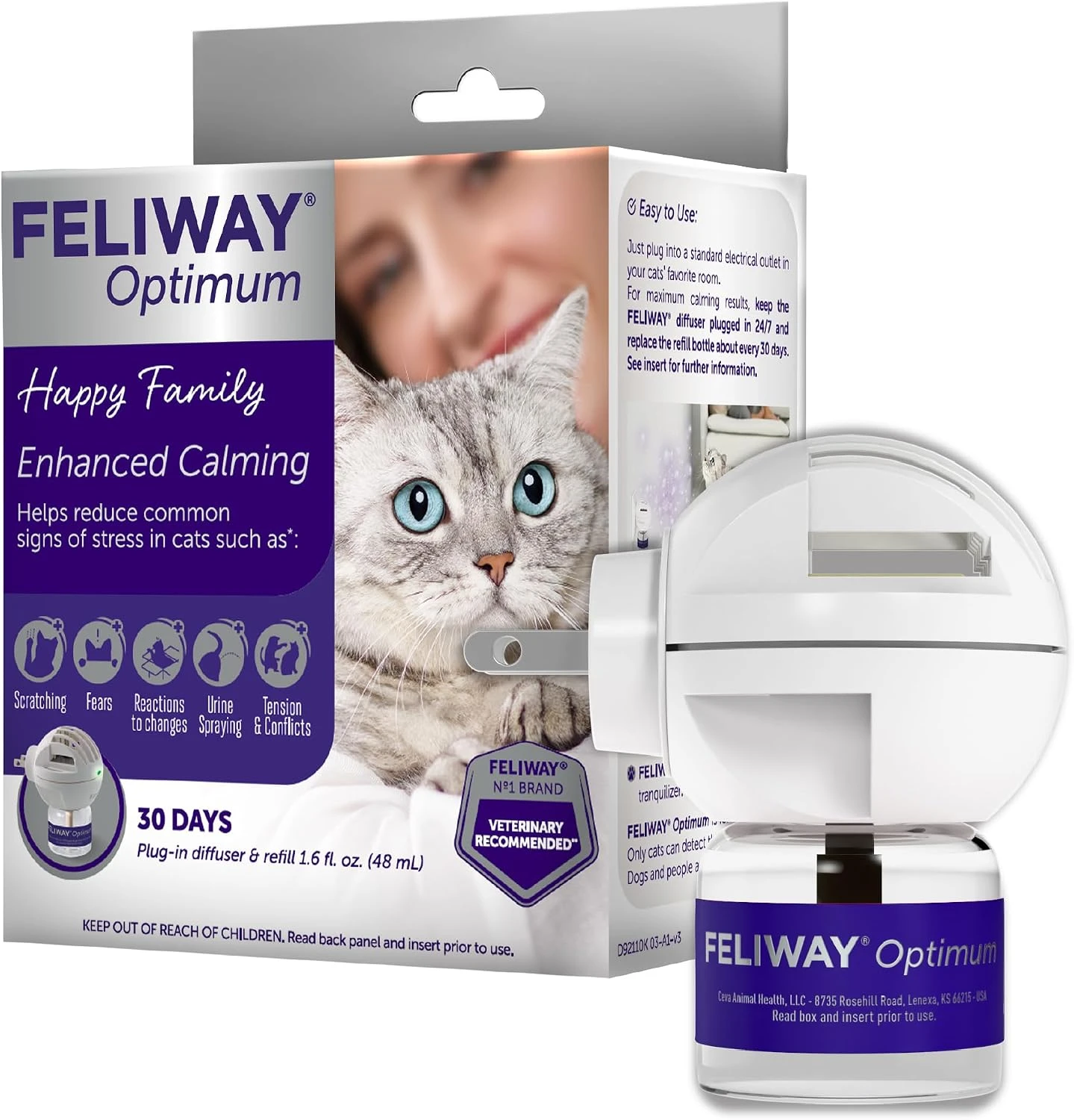
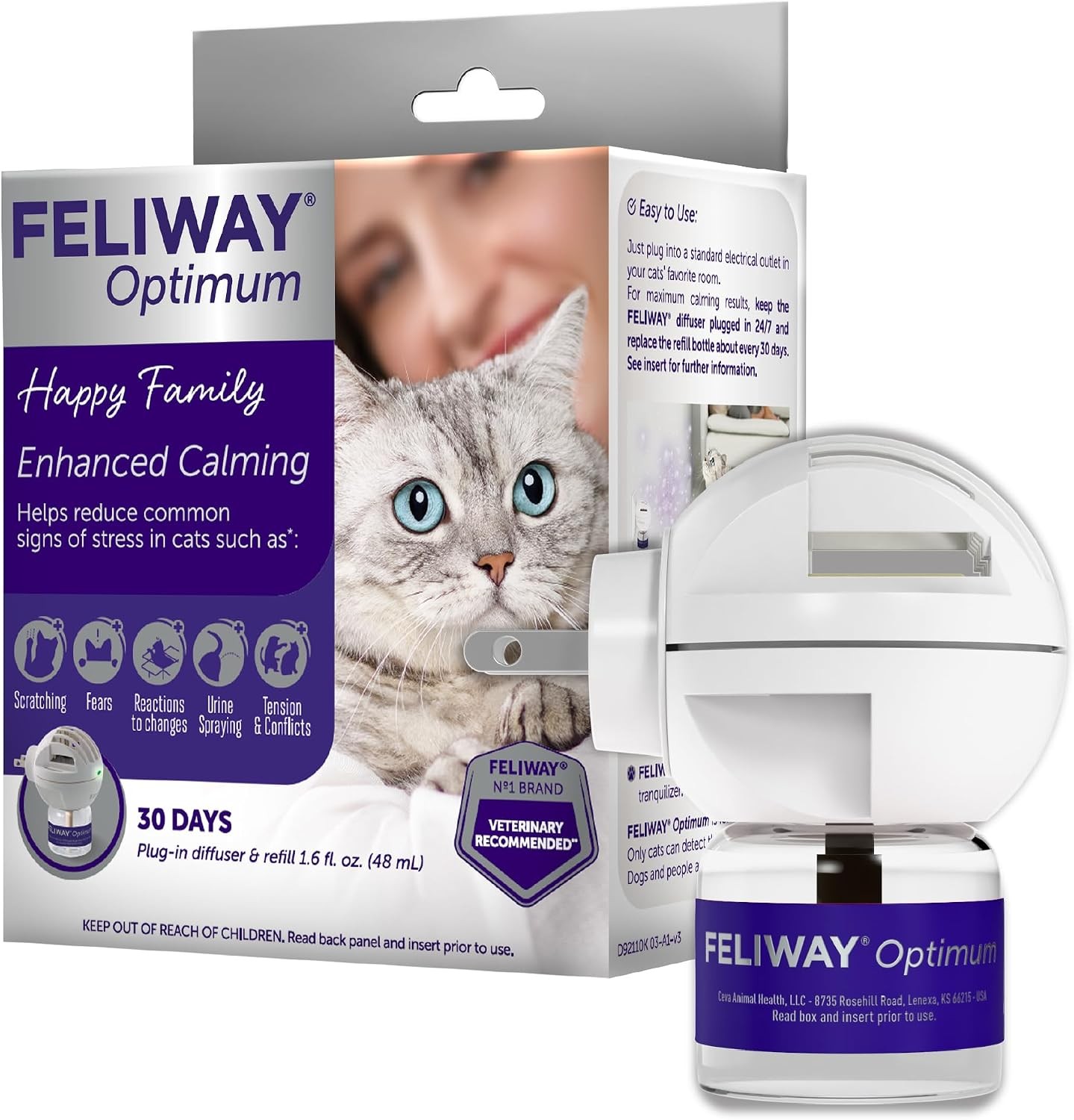
FELIWAY Optimum Cat Calming Pheromone Diffuser
An anxious or stressed cat struggles to express natural affection, often retreating into dark hiding spots like under the bed (see our guide on why cats hide under the bed). This clinically backed feline pheromone diffuser creates an atmosphere of serene safety, allowing your cat's loving personality to shine without fear.
Check Price on Amazon →How to Deepen the Emotional Bond With Your Feline
Feline love is a two-way street founded entirely on consensual, respectful interaction. If you want to strengthen your cat's affection and trust, implement these three veterinary-approved practices:
- Respect the Rule of Feline Consent: Always allow your cat to initiate physical contact. Extend your index finger toward their nose at sniffing height. If they bunting their cheek against your finger, pet them. If they pull back, give them space. Cats fall deepest in love with humans who respect their boundaries.
- Consistent Caregiving & Cleanliness: Predictability breeds security. Keeping feeding schedules consistent and maintaining an immaculate litter environment—whether using a high-end self-cleaning model like the Litter-Robot 4 or an affordable automatic unit like the PetSafe ScoopFree SmartSpin—removes environmental stress, allowing your cat to focus on emotional bonding.
- Engage in Daily Interactive Play: Dedicate 15 minutes every evening to wand toys, laser pointers, or puzzle feeders. Hunting alongside you builds deep team camaraderie and fulfills primal predatory fulfillment.
Frequently Asked Questions
Do cats actually feel love toward humans or just see us as food sources?
Science proves cats form deep emotional attachment bonds with humans. In clinical studies by Oregon State University, 64% of cats exhibited secure attachment to their caregivers, prioritizing human companionship over food and showing significant oxytocin hormonal surges during interaction.
What is the biggest sign a cat loves and trusts you?
The slow blink and head bunting (allorubbing). When a cat meets your gaze, softly closes their eyes, and rubs their cheek scent glands against your hand or face, they are depositing familiar pheromones and signaling complete emotional vulnerability and social safety.
Do cats remember their owners when they go away on vacation?
Yes. Felines possess remarkable associative memory and recognize their owner's unique voice, footsteps, and biological scent. Studies confirm cats differentiate their owner's voice from strangers and exhibit distinct greeting behaviors upon reunion.
Why does my cat show affection only at night or early morning?
Cats are crepuscular creatures, naturally most alert and sociable during dawn and dusk. Nighttime offers quiet, low-stimulus environments where felines feel most secure climbing into bed, sleeping on your pillows, or cuddling near your chest.
The Final Verdict: You Are Your Cat's Entire World
The next time someone tries to convince you that cats are unfeeling, independent loners, smile and look down at your purring friend. That gentle head bunt, those warm slow blinks across the living room, and that soft body curled across your ankles are not random accidents of nature.
They are the quiet, eloquent language of feline devotion. When a cat loves you, they love you with complete authenticity. Cherish every slow blink, offer gentle chin scratches, and enjoy the profound bond you share with your beloved feline.