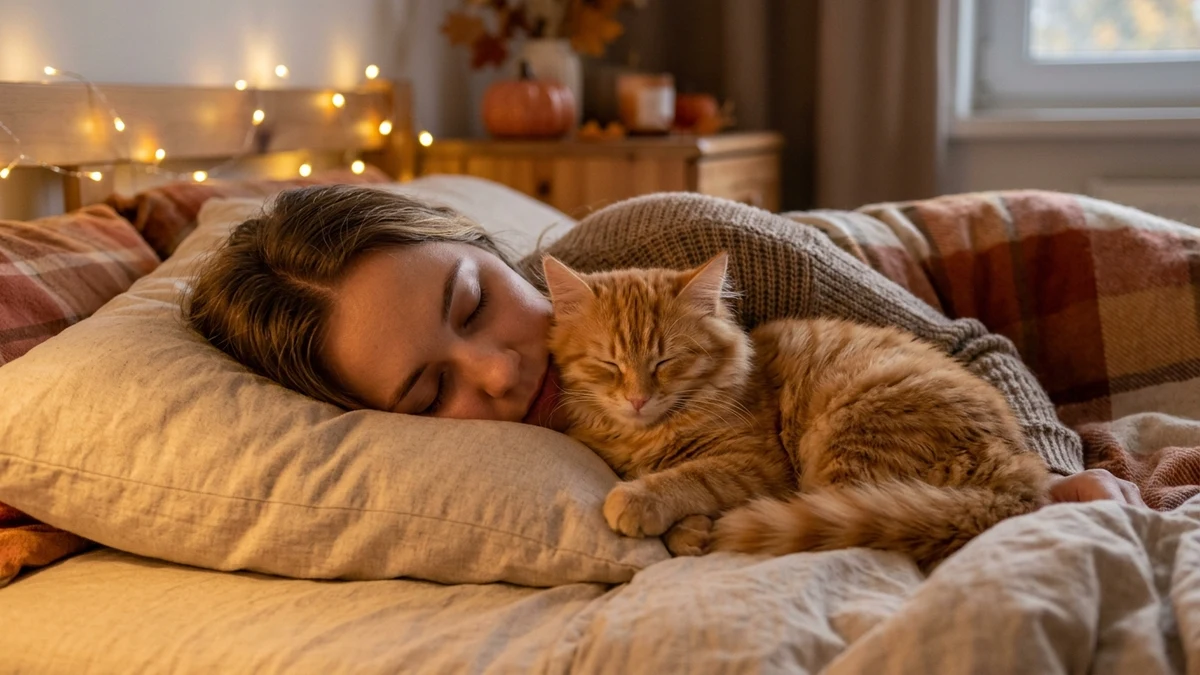
Quick Answer: You wake up in the pitch dark gasping for air, inhaling a mouthful of warm fur as a rhythmic purr vibrates against your nose. Veterinary behaviorists emphasize structured routines, positive reinforcement, and specialized feline environmental enrichment.
VETERINARY BEHAVIOR SUMMARY
Is it normal for cats to sleep on your face? Yes! Cats sleep on human faces and pillows primarily for thermoregulation (human heads radiate substantial metabolic heat), stability (heads do not toss, turn, or kick during sleep like legs do), scent security, and primal vulnerability bonding. While historically tied to eerie Halloween superstitions, this habit is one of the highest compliments of trust in the feline kingdom.
Every cat parent knows the startling sensation: you awaken at 3:00 AM unable to breathe, feeling a heavy, warm weight draped directly across your forehead, cheeks, or throat. A pair of soft whiskers tickles your nostrils, and a motorized purr reverberates straight into your skull. In an affectionate yet suffocating display, your feline has chosen your face as their personal luxury mattress.
Especially as autumn nights grow chilly around Halloween, internet pet forums fill with owners asking: Is this normal? Are they trying to smother me, or is there an ancient supernatural reason cats gravitate to our faces? Just like our recent investigation into why cats stare at walls and shadowy corners, this bizarre nighttime habit blends evolutionary survival mechanisms, intricate feline olfactory chemistry, and spooky historical folklore.
While understanding why cats sleep up to 16 hours a day explains their overall slumber drive, understanding where they choose to sleep unlocks the deepest secrets of feline psychology. Here are the 7 scientific reasons your cat sleeps on your face, the truth behind the infamous breath-stealing witch trial myths, and practical steps to sleep comfortably together.
The 7 Scientific Explanations Behind Face & Head Sleeping
1. The Radiator Effect: Thermoregulation & Metabolic Heat Loss
Domestic cats are the direct evolutionary descendants of the African wildcat (Felis lybica), a desert-dwelling predator whose basal internal body temperature sits between 101.5°F and 102.5°F (38.6°C–39.2°C). Because their baseline temperature is notably higher than our 98.6°F, cats expend substantial metabolic energy simply staying warm while resting.
When humans sleep under duvets and blankets, our bodies remain tucked away, leaving one primary thermal chimney exposed to the bedroom air: our head and face. The brain receives approximately 15% of cardiac output, radiating constant heat through the scalp, forehead, and cheeks. To a heat-seeking feline, your face is the equivalent of a contoured, fur-warmed heated stone. Combine that with the warm, moist air exhaled from your nose and mouth, and your face becomes the warmest microclimate in the house.

 Best Thermal Heat Alternative
K&H Pet Products Self-Warming Cat Bed Pad
If your cat seeks out your face strictly for heat during cold autumn and winter nights, give them their own dedicated thermal sanctuary. This electricity-free pad uses specialized heat-reflecting metalized insulation layers to capture and radiate your cat's own natural body heat. Place it directly beside your pillow so your cat stays toasty warm without smothering your nose.
Check Price on Amazon →2. The Stability Factor: Avoiding the 'Kicking Zone'
Cats are light, alert sleepers who enter REM sleep in short bursts. During sleep, human legs, knees, and feet twitch, kick, and roll over constantly as our sleep cycles shift. A cat who settles down by your shins or between your thighs is at constant risk of being jostled or launched off the mattress.
By contrast, the human head remains remarkably stationary on the pillow throughout the night. By nesting against your neck, scalp, or forehead, your cat secures an undisturbed, immovable anchor point where they can enter deep sleep without fear of unexpected impact.
3. Feline Scent Chemistry: Sebaceous Glands & Allorubbing
In feline social hierarchy, cats that belong to the same bonded family unit engage in allorubbing—rubbing their scent glands against one another to create a unified 'colony scent.' Cats have concentrated sebaceous scent glands around their cheeks, chin, temples, and forehead that secrete comforting facial pheromones.
Conveniently, human scalps and facial skin are also dense with sebaceous glands, producing a concentrated, recognizable scent signature of the person they love. When a cat presses their nose or cheeks into your forehead and falls asleep, they are actively participating in communal scent-sharing, marking you as their territory while simultaneously feeling protected by your familiar pheromonal profile. Compare this with why cats stare into your eyes to communicate deep relational bonding.
4. Soothing Auditory & Respiratory Rhythms
From the moment a kitten is born blind and deaf into a litter, their entire reality is guided by the steady, rhythmic heartbeat and breathing of their mother. The sound of deep, slow respirations and cardiovascular pulses signals absolute peace, security, and nourishment.
When you enter deep, slow-wave sleep, your respiration slows to a rhythmic cadence. Sleeping directly against your trachea, jawline, or cheek gives your cat front-row acoustic and physical access to those calming biological rhythms. In response, cats often initiate their own reciprocal 25–150 Hz purr, a frequency clinically proven to stimulate bone density repair and tissue recovery in mammals.
5. Nocturnal Insecurity & Separation Anxiety
While cats have remarkable low-light night vision, total darkness inside closed bedrooms can trigger vulnerability in nervous or newly adopted felines. Cats suffering from mild separation anxiety often manifest their insecurity as 'Velcro behavior' when the lights go out.
Placing their body directly over your nose and mouth ensures that if you move even a fraction of an inch, wake up, or attempt to leave the room, they will instantly feel it. For anxious felines, sleeping on your face is the ultimate insurance policy that their human protector will not disappear during the night. For more on stress triggers, read our guide on identifying subtle signs of cat anxiety.
 Best Veterinary Calming Diffuser
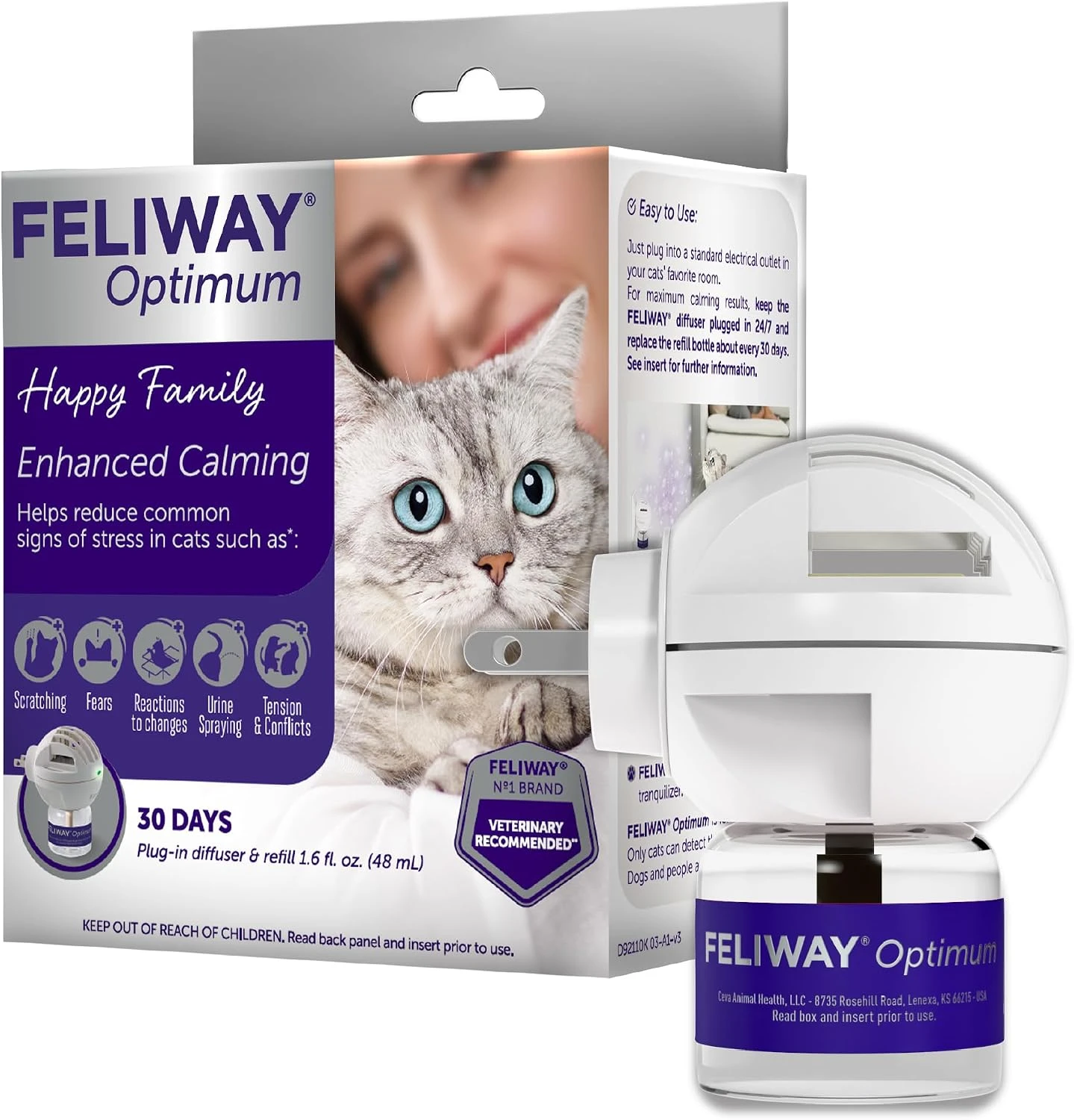
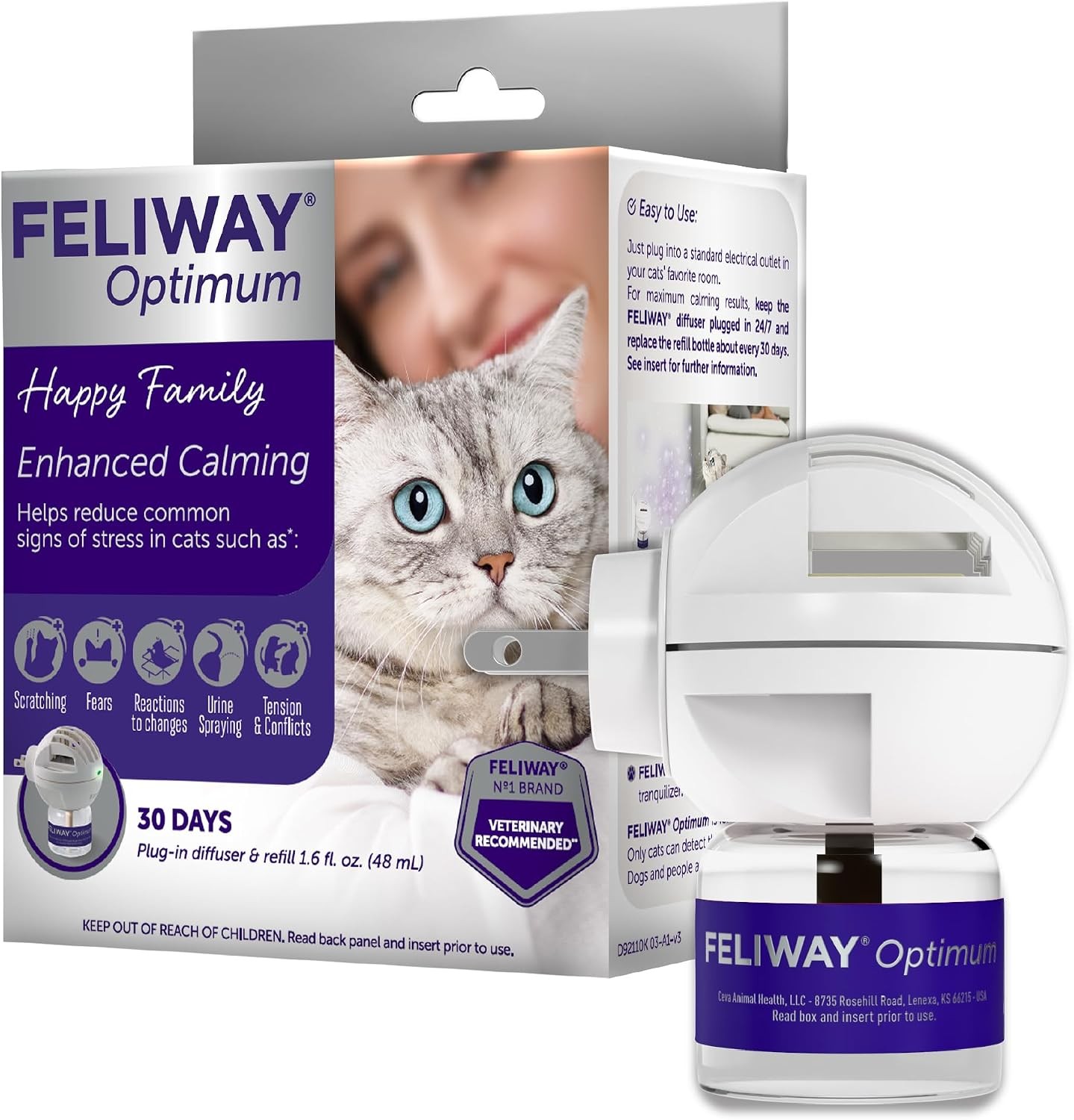
FELIWAY Optimum Cat Calming Pheromone Diffuser Kit
Does your cat sleep on your face out of nervous clinginess, midnight pacing, or separation distress? Veterinary-recommended FELIWAY Optimum releases an advanced synthetic feline pheromone complex that restores feelings of deep environmental security. Diffusing it in your bedroom helps insecure cats relax comfortably onto bedside perches without clinging frantically to your face.
Check Price on Amazon →6. Primal Trust & Vulnerability Shielding
In evolutionary biology, sleeping is the most dangerous state an animal can enter. As both predator and prey species, felines in nature never lower their defenses near any creature they do not trust implicitly.
When a cat sleeps directly on your neck or face, they are exposing their soft underbelly and neck to your teeth and hands. This vulnerable orientation is the ultimate declaration of unconditional trust. In their eyes, you are the apex protector of the clan, and tucking their head against yours signifies that they trust you with their life.
7. Bedside Territory & Elevated Observation
Pillows elevate a cat several inches above the flat mattress, granting them a commanding vantage point over the bedroom door and floor. In multicat households, the top pillow is often coveted prime real estate. By sleeping on or above your head, a confident cat claims the premier elevated position in the room while simultaneously commanding proximity to the dominant resource (you).
 Best Bedside Head-Level Perch
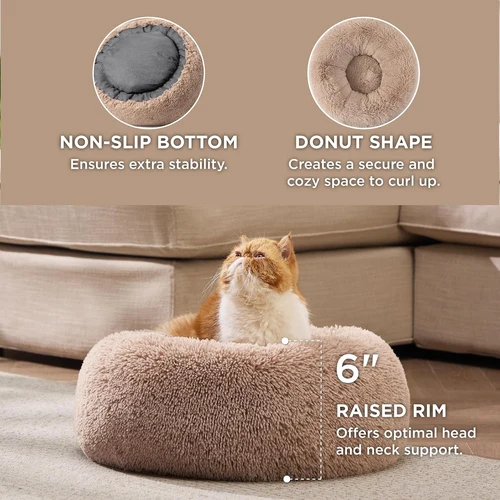
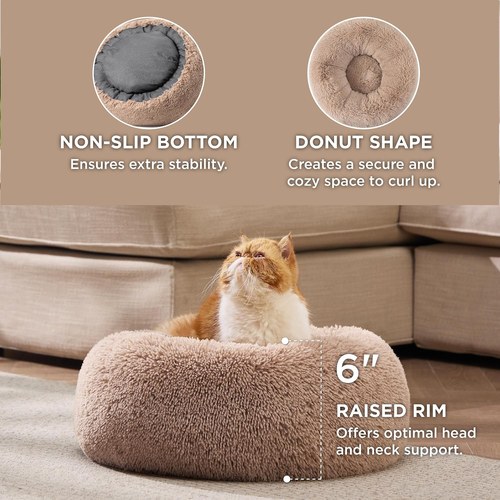
Bedsure Calming Donut Cat Bed (20-Inch)
Awarded for deep-sleep orthotic comfort, this faux fur donut bed features a 6-inch raised rim that supports your cat's head and neck while creating a cozy nesting burrow. Place it right against your pillow: your cat enjoys head-level closeness, plush warmth, and security, while you reclaim clean airflow and free breathing.
Check Price on Amazon →The Halloween Myth: Did Cats Really 'Steal Your Breath'?
Few domestic animal behaviors have inspired as much supernatural paranoia as cats sleeping on human faces. During the 17th and 18th centuries in England and Colonial America, a pervasive superstition claimed that domestic cats—viewed as demonic familiars during the Salem Witch Trials—would creep into bedrooms at night to "suck the breath and soul" from sleeping infants and elders.
Deconstructing the 17th-Century Superstition
Coroners' inquests in 1708 frequently ruled that babies found deceased in cribs had their breath "stolen by the family cat." Today, medical history recognizes that these tragic occurrences were cases of Sudden Infant Death Syndrome (SIDS) or accidental suffocation in heavy down bedding, for which cats were convenient scapegoats.
Biologists now understand why cats were observed sniffing the lips of sleeping humans. When you breathe out, your warm exhalations carry microscopic food vapors and moisture that intrigue a feline's hyper-acute sense of smell. Cats were never stealing souls—they were simply enjoying warm air currents and aromatic curiosity!
Spiritual Interpretations: Guardian Felines & Dream Filtering
In contrast to Western witchcraft hysteria, ancient Eastern and Celtic spiritual traditions viewed a cat sleeping by your head through a reverent lens:
- Psychic Guardianship: Folklore held that while human souls wander during dream states, the physical body is vulnerable to negative nocturnal energies. A cat perched like a crown above your head acted as a spiritual sentry, shielding the sleeper from nightmares.
- The Crown Chakra Alignment: In metaphysical traditions, the top of the head corresponds to the Sahasrara (Crown Chakra), the gateway for spiritual intuition. Cats, revered as intuitive astral navigators, were believed to harmonize disruptive mental chatter into peaceful slumber.
Where Your Cat Sleeps on Your Bed (And What It Means)
A cat's chosen sleeping coordinates on your bed reveal fascinating insights into their personality, security level, and bond with you:
| Bed Location | Underlying Psychological Meaning | Bonding Level |
|---|---|---|
| On Your Face or Neck | Seeks maximum warmth, maternal heartbeat, and total scent security. | ⭐⭐⭐⭐⭐ Maximum Attachment |
| Pillow Above Your Head | Enjoys elevated territory, motionless comfort, and companionship without physical constriction. | ⭐⭐⭐⭐ High Trust & Territory |
| Curled on Your Chest | Drawn to lung expansions, heartbeat acoustics, and mutual eye contact during wakefulness. | ⭐⭐⭐⭐ Deep Emotional Bond |
| Between Your Legs | Creates a secure, enclosed valley ("nest") that shields their back and sides from drafts. | ⭐⭐⭐ Co-Sleeping Security |
| Foot of the Bed | Values proximity to you while maintaining an unobstructed escape route if startled. | ⭐⭐ Independent Companionship |
Hygiene, Allergies & Safety: Managing Face-Sleeping Risks
While having your cat curl against your face is heartwarming, it introduces legitimate medical and hygiene considerations:
- Fur & Dander Inhalation: Breathing in concentrated pet dander, micro-droplets of dried feline saliva protein (Fel d 1), and loose fur all night can aggravate allergic rhinitis, nighttime sneezing, and asthma attacks.
- Litter Box Particle Transfer: Cats walk through clumping litter several times a day. When they place their paws directly against your pillowcase or lips, microscopic litter dust and bacterial traces can transfer to your skin.
- Infant Safety Warning: Never allow cats access to nursery cribs or infant sleeping zones. Because infants cannot roll over or push a heavy cat away, co-sleeping poses genuine suffocation hazards.
 Best Bedding Hygiene Tool
HappyLong Reusable Pet Hair Remover Brush
If your feline sleeps on your pillows and sheets, keeping bedding free of fur and allergens is essential for deep sleep. This 17.3-inch reusable dual-sided lint brush lifts trapped cat fur, dander, and dust from pillowcases, comforters, and mattress covers without sticky tape refills. Keep it bedside to keep your sleeping zone hygienic and fur-free in seconds.
Check Price on Amazon →How to Gently Redirect Your Cat to a Bedside Nest
If you love having your cat close but cannot tolerate waking up with paws in your mouth or fur in your eyes, follow these gentle redirection steps:
- Establish a Pillow-Adjacent Perch: Set up an elevated bed like the Bedsure Calming Donut Bed directly next to your pillow, matching your eye level.
- Transfer Your Scent: Drape a worn, unwashed t-shirt over the new bed. This provides the familiar olfactory comfort your cat craves.
- Add Thermal Appeal: Slip a K&H Self-Warming Pad inside the bed so it radiates consistent warmth that rivals your face.
- Consistent Redirection: Whenever your cat crawls across your nose, gently lift them and place them into their bedside nest, pairing the move with gentle chin scratches. Within 5 to 7 nights, most cats happily adopt their designated luxury suite.
Comparison: Bedside Sleep & Hygiene Essentials
| Product | Category | Primary Problem Solved | Action |
|---|---|---|---|
| Bedsure Calming Donut Bed | Orthopedic Bedding | Head-level comfort & pillow redirection | Check Price on Amazon |
| K&H Self-Warming Pad | Thermal Insulation | Replaces human head warmth electricity-free | Check Price on Amazon |
| HappyLong Pet Hair Remover | Bedding Care | Removes pillow fur & dander allergens | Check Price on Amazon |
| FELIWAY Optimum Diffuser | Pheromone Calming | Soothes nocturnal separation anxiety | Check Price on Amazon |
Frequently Asked Questions
Is it safe to let my cat sleep on my face?
For healthy adult cat owners, it is generally harmless aside from potential nighttime allergy flare-ups. However, cats should never be permitted to sleep with infants or toddlers due to accidental suffocation hazards, and immunocompromised individuals should avoid direct contact with pet fur around the mouth and eyes.
Why do cats sleep specifically above your head on your pillow?
Your head is the most stable, motionless section of your body while you sleep, preventing the cat from being kicked or tossed. Furthermore, human scalps radiate continuous warmth and elevated pillows give cats a commanding security vantage point over the bedroom.
Did cats really 'steal breath' in folklore?
No. The belief that cats steal breath originated in 17th-century European witch trial folklore and was historically used to explain Sudden Infant Death Syndrome (SIDS). In reality, cats are naturally attracted to the warm air currents of exhalation and familiar human scents.
What does it mean spiritually when a cat sleeps above your head?
In cultural folklore and metaphysical traditions, a cat sleeping above your head represents energetic guardianship, psychic protection, and the filtering of negative dreams while your conscious mind travels during dream states.
How can I stop my cat from sleeping on my face without hurting their feelings?
Place an elevated, plush bed like the Bedsure Calming Donut Bed directly beside your pillow, insert a K&H Self-Warming Pad, and drape an unwashed shirt over it. This gives your cat identical warmth, scent, and proximity without suffocating your face.
Final Verdict: Embracing Feline Affection
Having a cat drape themselves across your face in the dead of night might not be the most comfortable way to sleep, but it represents the purest expression of feline devotion. To your cat, your face is a steady, heat-radiating mountain of security, familiar colony scents, and soothing respiratory rhythms.
Whether you choose to embrace the nighttime cuddles or guide your cat toward a plush, self-warming bedside retreat, you can take comfort knowing that behind this funny, bizarre habit lies an ancient predator choosing you as their safest place in the world.