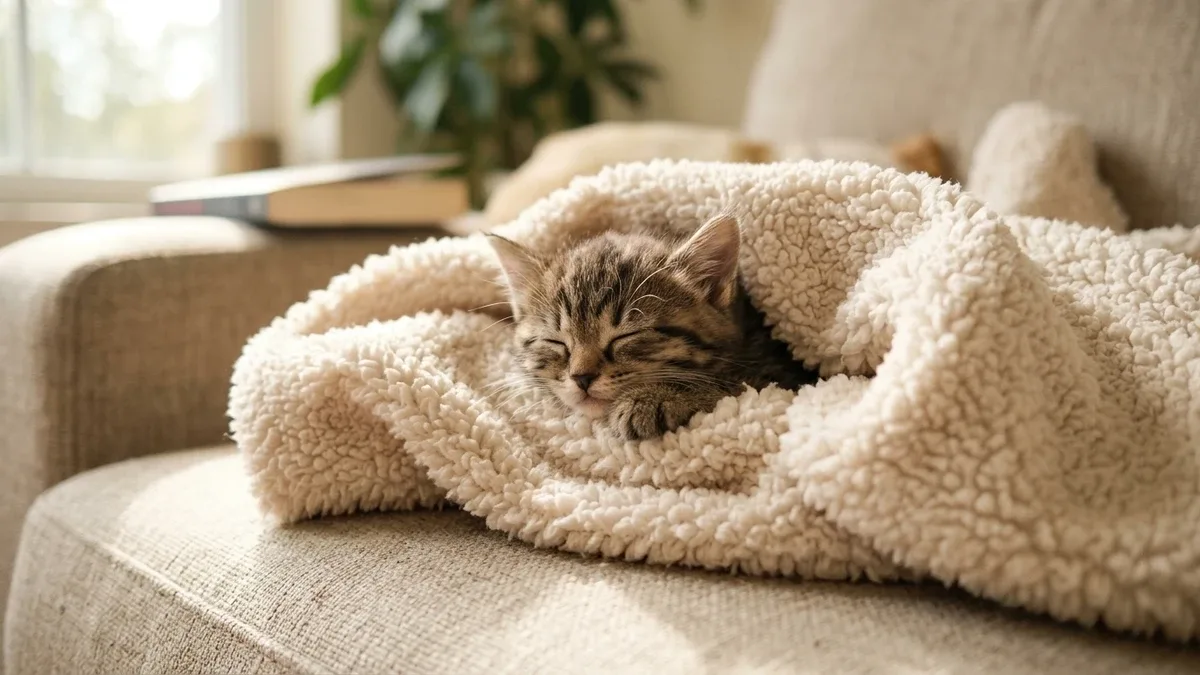
Winter does two things to cats: they hunt the warmest square footage in the house, and they let you know, loudly, when the floor has betrayed them. A heated cat bed solves both — but the internet is full of no-name heating pads that chew through cords or run too hot, and of "heated" beds that are actually just shiny fabric doing nothing.
This guide covers the safety rules that matter, then five picks from the one brand that consistently builds cat-specific heated products with independent safety listing and thermostatic control — plus cord-free self-warming options for cats and households where a cord is a non-starter.
Are Heated Cat Beds Safe? The 4 Rules First
A heated bed is a small electric appliance your cat sleeps on for 14 hours a day. Before any pick matters, these rules decide what you buy:
- Independently safety-listed, not "UL-recognized." A whole product that is safety-listed (ETL or UL) has been tested as an assembly. "UL-recognized components" just means the parts were certified, not the bed. All four electric picks below are safety-listed as complete products.
- 4-6 watts, thermostatically controlled. Quality cat beds sip 4-6W and regulate to your cat's body temperature instead of baking at a fixed setting. Anything without a thermostat walks out of this list.
- Cord discipline. Route the cord along a wall behind furniture, or pick a self-warming model if your cat chews. If a cord shows a single tooth mark, retire the bed — not the cat's opinion of it.
- Know your cat's nerves. Cats with diabetic neuropathy, senior cognitive decline, or reduced sensation can't reliably move away from heat. Use a cord-free self-warming bed for them, which physically cannot exceed body temperature.
One more fact that prevents a lot of returns: a good heated bed does not feel hot when you press it empty. The thermostat only engages under your cat's weight. The "pillow test" (below) is how you verify it's working.
How These Picks Were Ranked
- Safety listing as a complete product (pass/fail gate)
- Thermostatic control — dual thermostats warm under load without overheating an empty bed
- Wattage — 4W beats 6W for continuous overnight use on your power bill (both cost pennies per month)
- Washability — removable, machine-washable covers are non-negotiable in multi-cat homes
- Real ownership data — thousands of verified reviews checked for the recurring complaint patterns: cord chewing, cover pilling, phantom warmth complaints
Best Overall: K&H Thermo-Kitty Bed Deluxe
This is the bed we hand to almost everyone. The Deluxe wraps a removable 4W thermostatic heater inside a thick pillow base, then adds a removable hood — a cave-tent your cat can disappear into. The dual thermostat warms the surface 10-15F above ambient and rises to body temperature under load. The hood comes off for summer, the cover unzips and washes, and the whole product is safety-listed.
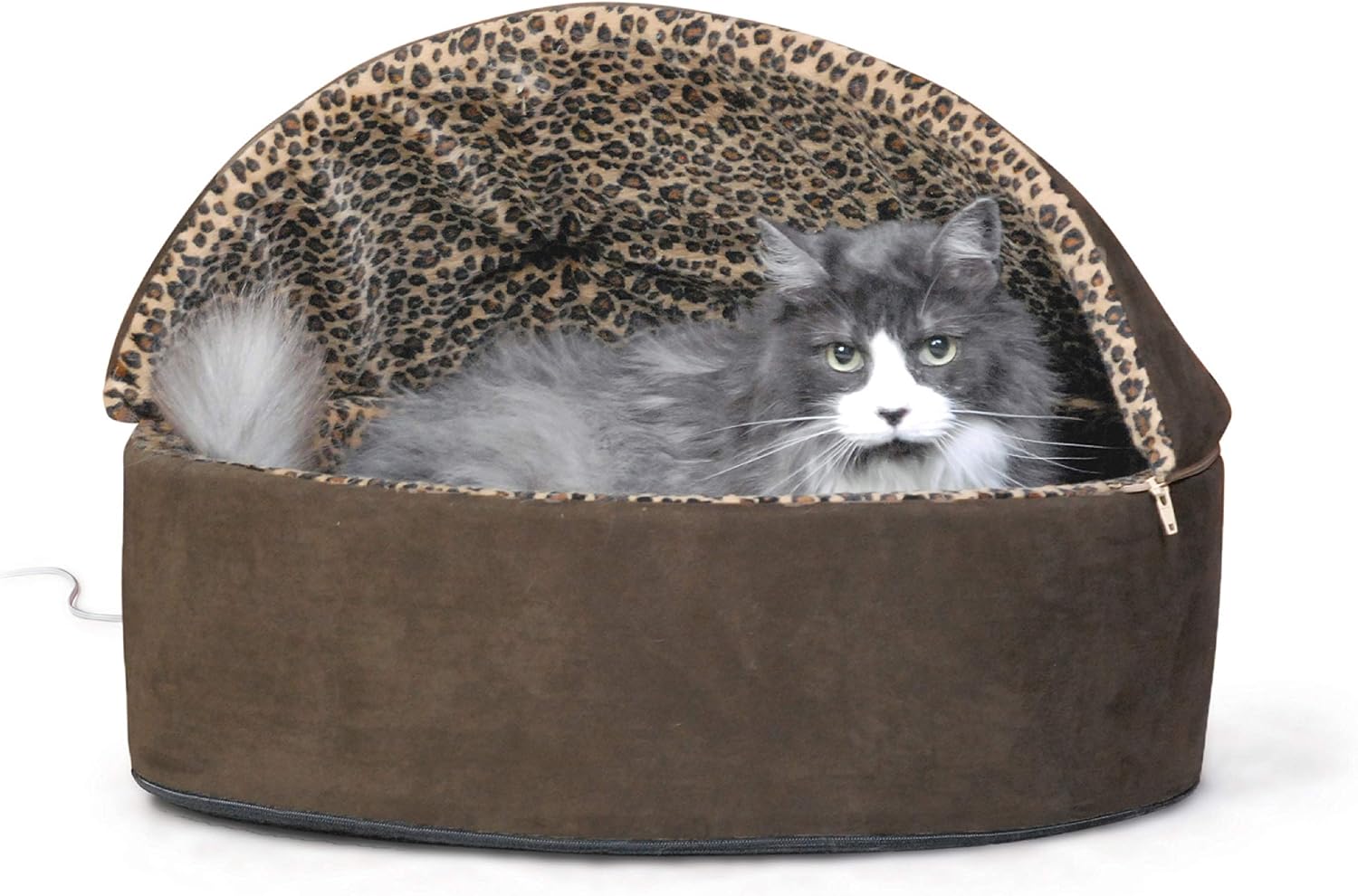
K&H Thermo-Kitty Bed Deluxe Heated Cat Bed (20 in, Mocha/Leopard)
Removable 4W thermostatic heater, machine-washable cave hood, safety-listed. The gold-standard enclosed heated bed
Pros:
- Enclosed cave design retains body heat — the warmest of the four electric picks in a drafty room
- Dual thermostat: 10-15F above ambient empty, body temperature under load — can't overcook
- Heater and hood both remove, so it works in all four seasons
- 20-inch floor fits a 15-20 lb cat stretched out
Cons:
- Hooded design won't suit cats who insist on watching the room while they sleep (offer it hoodless first)
- Leopard/mocha print is a bold interior-design opinion
Verdict: If you want one electric bed that handles cold floors, drafts, and senior cats, buy this and be done.
Best Open Bolster: K&H Thermo-Kitty Fashion Splash
Some cats refuse to sleep inside anything — they want the bolstered donut, head up, perimeter visible. The Fashion Splash is a round bolster bed with orthopedic foam walls and the same removable 4W safety-listed heater sunk into the base. It's the same thermal engineering as the Deluxe for less money, minus the hood.
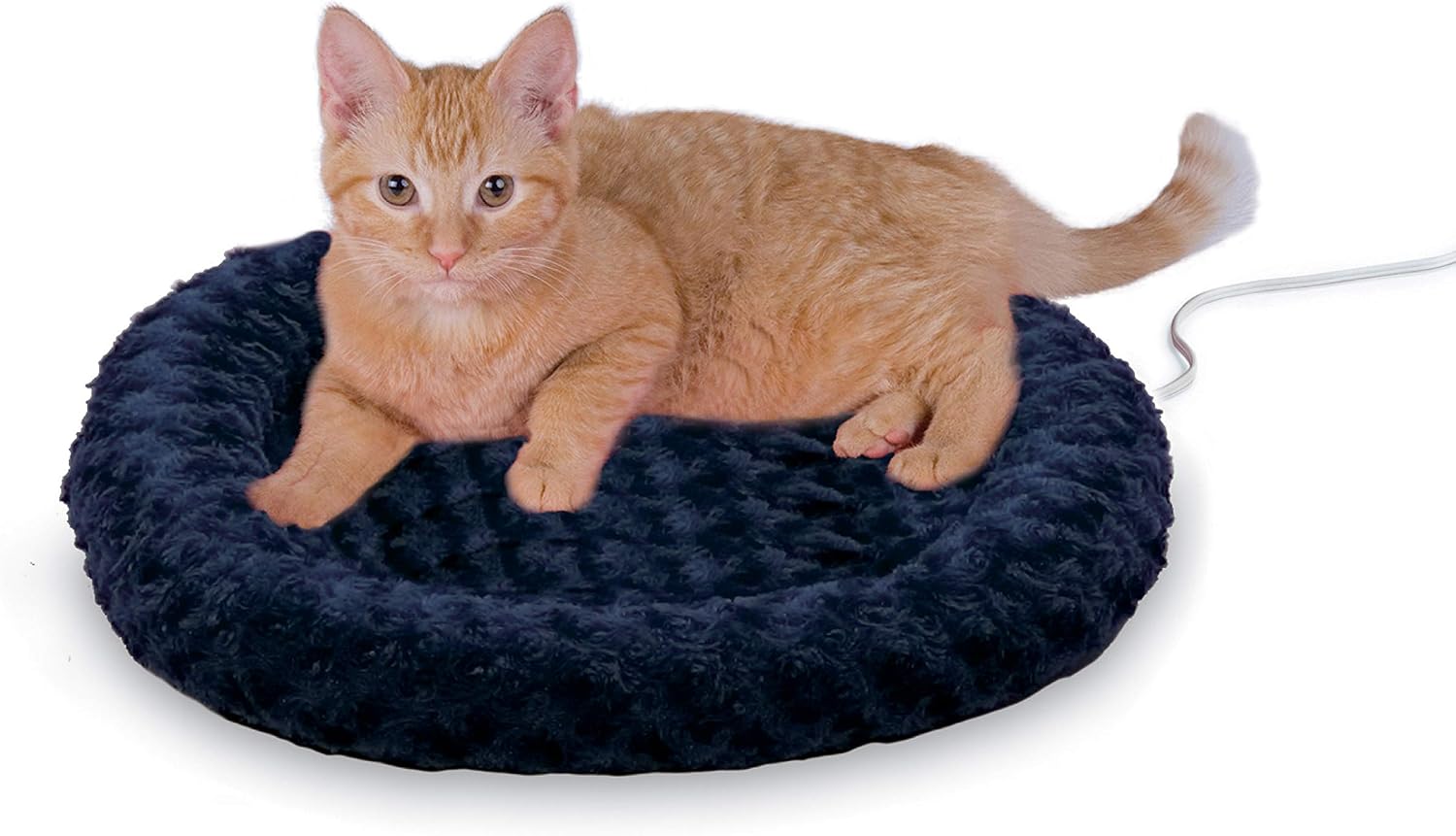
K&H Thermo-Kitty Fashion Splash Bolstered Heated Bed (18 in Round, Blue)
Orthopedic bolster walls, removable 4W thermostatic heater, safety-listed. For cats who hate caves
Pros:
- Raised bolsters support the head and spine — arthritis cats stand up 20% less stiff
- Same removable 4W heater and safety listing as the Deluxe
- Open design means you can see the pad and the cat at a glance
- $42-ish undercuts most "calming donut" beds that provide zero actual heat
Cons:
- Bolsters are bolsters: long-haired cats shed into the seams and need a brush pass weekly
- 18-inch small runs snug for a 16+ lb cat — size up to the large 22x16
Verdict: The cave-hater's answer. If your cat sleeps in open bowls and on chairs, this is the form factor they'll accept.
Most Versatile: K&H Thermo-Kitty Mat
Not everyone needs a bed shape. The Thermo-Kitty Mat is a 25x12.5-inch reversible foam mat with a waterproof removable 6W heating pad — it drops onto a cat tree platform, a window perch, the top of a bookshelf, or directly on a cold tile floor. It's the pick when the warm spot already exists but the floor under it doesn't cooperate. See our window perch guide for the exact perch this mat transforms in January.
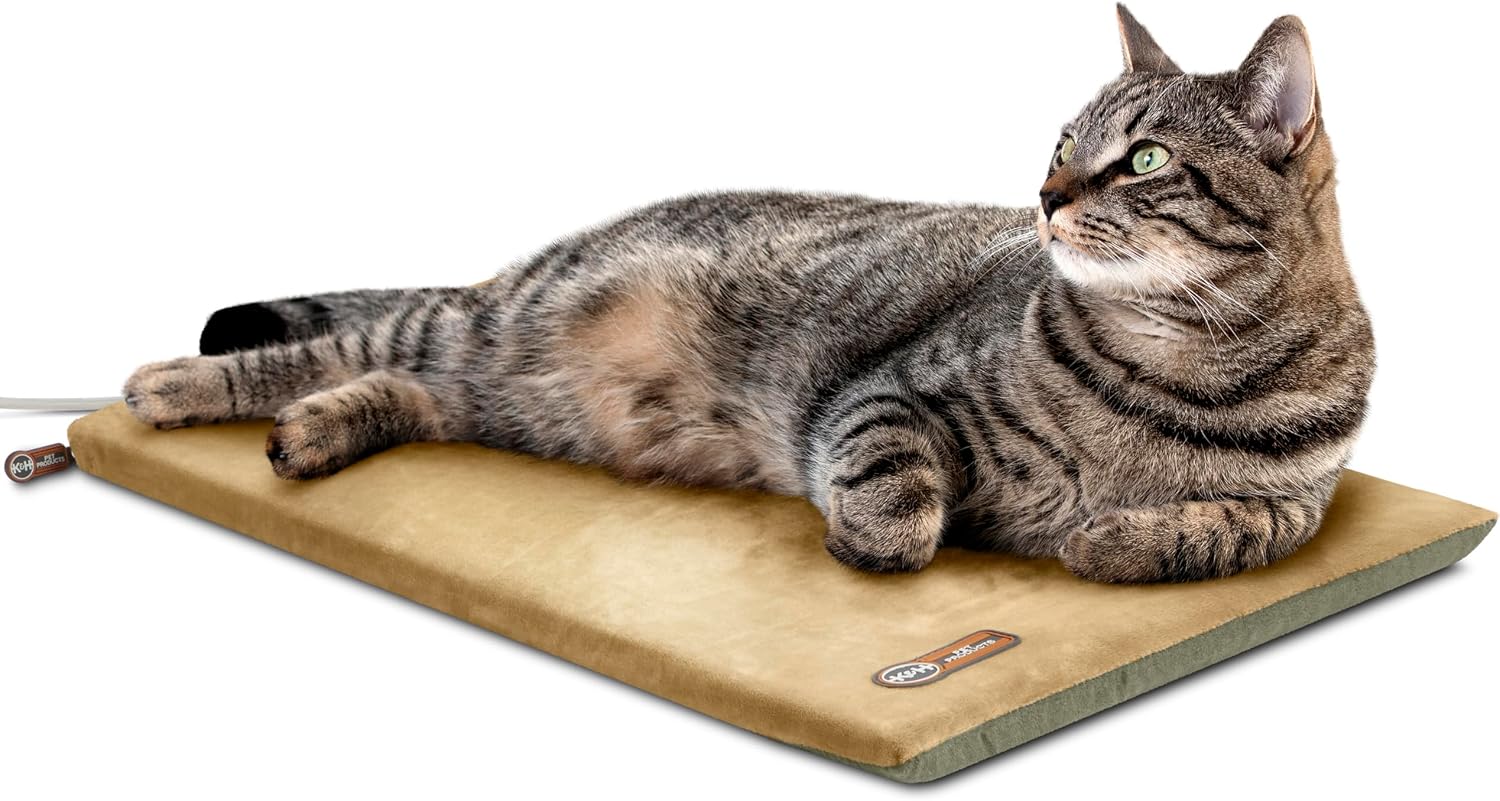
K&H Thermo-Kitty Mat Heated Pet Pad (25 x 12.5 in, 6W)
Waterproof removable heater, reversible foam, machine-washable. Fits perches, trees, shelves, and floors
Pros:
- Fit-anywhere rectangle: perch, tree platform, crate, sofa corner
- Waterproof heater housing survives the occasional vomit or accident (yes, we're thinking of that Tuesday)
- 25-inch length stretches to full-body coverage for big cats
Cons:
- No bolsters — it's a pad, not a bed; add an eco-friendly cat tree to give it edges
- 6W runs slightly warmer than the 4W beds, which some cats find too toasty in a heated apartment
Verdict: The best value entry into heated warmth, and the right pick when the cat already owns a perch or cat tree you want to upgrade.
Best Cord-Free: K&H Self-Warming Nuzzle Nest
If there's a cord-chewer, a kitten, or no outlet anywhere near the good spot, stop shopping and get a self-warming bed. The Nuzzle Nest is a deep-dish bolster bed lined with a heat-reflective mylar-style fabric that captures your cat's own body heat and radiates it back. No cord, no watts, no thermostat to fail — it physically cannot exceed your cat's body temperature, which makes it the safest possible heated bed, full stop.
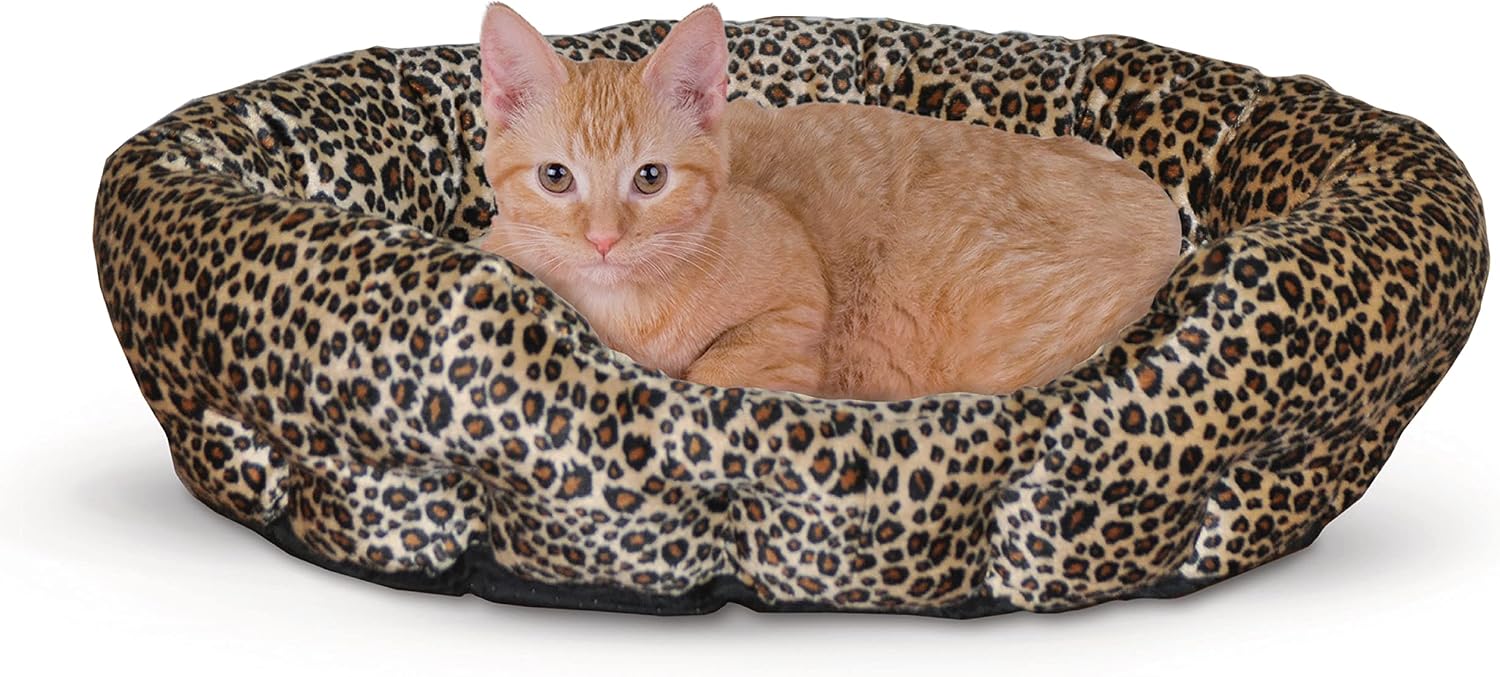
K&H Self-Warming Nuzzle Nest Cat Bed (19 in, Body-Heat Reflective)
Cord-free, watt-free, chew-proof-by-design. Reflective liner recycles body heat. Bolstered deep-dish for curlers
Pros:
- Zero electrical risk: safe for kittens, chewers, and cats with reduced nerve sensation
- Deep bolsters support the "donut curl" sleepers who want containment
- Works anywhere: under a desk, on a shelf, in a carrier, at your kid's college dorm
- Machine washable, no components to remove
Cons:
- Only reflects heat — in a genuinely cold room (below 60F) it's a nice bed, not a furnace
- Some cats need a week to notice the difference; a cat that sleeps 16 hours will find it fast
Verdict: The default choice for kittens, anxious cats, and cord-chewing households. It's also the exact technology we recommend pairing with a window perch for sun-tracking cats.
Cheapest Way to Warm Any Spot: K&H Self-Warming Pad
Same reflective-body-heat trick as the Nuzzle Nest, stripped to a reversible 21x17-inch pad. On a bed, on furniture, inside a carrier, under a cardboard box for the box-purists. At roughly $17, it's the $17 experiment before you commit to furniture.
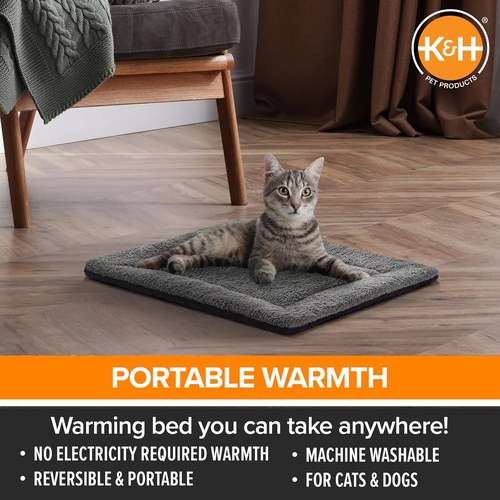
K&H Self-Warming Pet Pad (21 x 17 in, Reversible Plush)
The budget body-heat mat: no electricity, machine washable, fits anywhere a cat already naps
Pros:
- Lowest-cost entry point in the category and genuinely effective
- Reversible plush matches two decors instead of one
- Portable: travel carrier, office desk, second floor
Cons:
- Thin pad: cats who want deep cushioning will drag it into the nearest soft thing anyway
- Like all reflective liners, it works best when the cat is ON it — it won't pre-warm a room
Verdict: Buy this on a whim. Worst case, your cat ignores it. Best case, it's the end of the bathroom-floor sleeping era.
Electric vs Self-Warming: Which One Fits Your Cat
| Choose electric if… | Choose self-warming if… |
|---|---|
| Room runs below 65F, drafty floors | Kittens, chewers, or cats with reduced sensation |
| Senior or arthritic cat who benefits from deep warmth | No outlet near the good spot |
| Hairless breeds (Sphynx) and short-coat cats | Travel, carriers, or multi-home cats |
| You want the warmest possible surface | You prioritize zero-risk over maximum heat |
Neither pick disqualifies the other: in multi-cat homes, one electric anchor bed plus two cord-free pads scattered along the cat's daily route beats one throne nobody shares. Our indoor cat setup guide covers the rest of the layout.
The "It Doesn't Feel Warm!" Problem (It's Working)
This is the number-one support ticket in the category and the number-one source of one-star reviews written by people who skipped the manual. K&H's thermostats heat to your cat's body temperature under weight. Press an empty pad: room temperature. You are not the target organism.
The pillow test: put a heavy pillow (or a bag of rice) on the bed for 20 minutes, then feel underneath the pad. Warm-not-hot means the bed works exactly as designed. If it's cold after the test, the outlet or unit is genuinely dead — return it. If it's hot, unplug it and return it. Either way you have your answer in twenty minutes.
Placement and Setup Tips
- Keep it off bare tile. The bed insulates from the cat up, not the floor down. A thin foam mat or rug underneath noticeably improves surface temperature on tile and concrete.
- Ditch the plastic. Brand-new beds ship in film that hisses when touched. Open it, wash the cover once, air it 24 hours. Cats reject packaging smells more than you'd think.
- Put it where they already sleep. A heated bed in a novel corner is a heating pad nobody uses. Move the bed to the current champion nap spot instead. This mirrors the scent-swap logic in our winter warmth guide.
- Use the outlet you can watch. First two weeks, plug into a circuit you can physically see — you want to catch cord-chewing behavior on day one, not by the scorch mark on day twelve.
- Give the cat a vote. Ignored for four days? Move it one meter toward the window, the radiator zone, or the household's main traffic lane. Cats choose location over product every time.
Cats Who Should Skip Electric Beds
- Kittens under ~4 months — too small for reliable thermostat engagement and prone to mouth everything. Use the cord-free pad.
- Cats with diabetic neuropathy or diminished sensation — they may not feel a pad getting too warm. Self-warming only.
- Known power-cord chewers — a bitter-spray deterrent helps, but a reflective pad is the zero-risk answer.
- Cats with open wounds or skin grafts — heat and healing don't mix; ask your vet first.
Frequently Asked Questions
Are heated cat beds safe for indoor cats?
Yes, when the bed is independently safety-listed (not just "UL-recognized"), thermostatically controlled, and low-wattage (4-6W). Keep cords out of chew reach, never use an outdoor heated product indoors without checking its rating, and supervise the first few days. Cats with reduced sensation (diabetic neuropathy, senior cognitive decline) should use a self-warming bed instead.
Why does my new heated cat bed not feel warm to the touch?
This is by design. Quality heated beds (K&H, for example) use thermostats that only heat to a cat's normal body temperature when weight is on the pad. Test it by placing a heavy pillow on the bed for 20 minutes, then feel underneath: warm, not hot, means it's working.
Electric or self-warming: which is better for my cat?
Self-warming pads (reflective mylar-style liners) are best for kittens, tiny or anxious cats, cord-chewing households, and anywhere without a nearby outlet. Electric beds deliver more consistent warmth for seniors, arthritis sufferers, hairless breeds, and rooms below 65F. Many owners run both and let the cat vote.
How hot should a heated cat bed get?
Surface temperature should stay roughly 10-15F above ambient when empty and stabilize near your cat's body temperature (101-102.5F at the pad surface under load) when occupied. Anything that feels hot to your inner wrist is too hot for a cat and should be unplugged and returned.
The Bottom Line
Cold floors, colder January, and a cat with strong opinions about both. For most homes: the K&H Thermo-Kitty Bed Deluxe for cave lovers, the Fashion Splash for bolsters, the Thermo-Kitty Mat to upgrade the perch they already own — and if there's a cord-chewer or a kitten, the Self-Warming Nuzzle Nest is the same warmth without the wire. Run the pillow test, place it in their current favorite square foot, and let the cat file the verdict.
Building out a full winter setup? Start with the complete winter warmth playbook and the window perch buying guide.