You crawl into bed. Seconds later, a familiar weight settles at your feet — not beside your head, not on the cat tree across the room. Your cat has claimed the foot of the bed. Again.
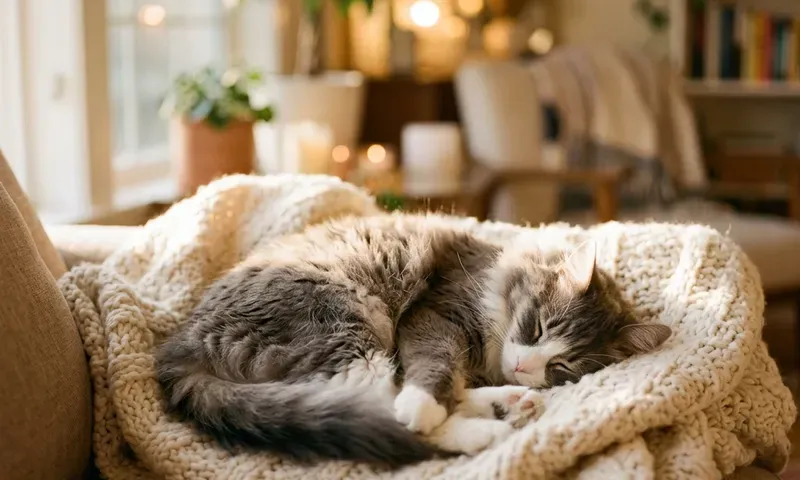
It's one of the most universal cat parent experiences. But why there? Why not the warm pillow, the cozy blanket fort, or the expensive heated bed you bought? The answer isn't just "cats are weird" — it's evolutionary biology, territorial strategy, and a surprising amount of affection.
The Short Answer
Cats sleep at the foot of the bed because it's the optimal strategic position: close enough to bond and monitor you, far enough to maintain an escape route, and positioned to guard the "entrance" (your bedroom door). It's not rejection — it's calculated proximity.
7 Science-Backed Reasons Your Cat Chooses Your Feet
1. The "Sentinel Position" — Evolutionary Guard Duty
In the wild, cats are both predator and prey. Sleeping is vulnerable. The foot of the bed faces the bedroom door — the most likely entry point for threats. By positioning there, your cat maintains a clear sightline to the door while keeping you (their primary resource) in peripheral view. It's the same instinct that makes feral cats sleep on high ground facing outward.
2. Temperature Regulation — The Goldilocks Zone
Your core body temperature radiates heat upward. Your head and torso generate the most warmth — sometimes too much for a cat's preferred 86-97°F thermal neutral zone. Your feet are cooler, creating a comfortable microclimate. Cats instinctively seek the "just right" temperature, and your feet often hit it perfectly.
3. Escape Route Preservation
Sleeping beside your head traps the cat between you and the wall/headboard. At your feet, they have open space on three sides. If something startles them — a noise, a sudden movement, a nightmare kick — they can bolt instantly without climbing over you. This isn't fear; it's preparedness.
4. Scent Exchange Without Overwhelm
Cats communicate through scent. Sleeping near you deposits their pheromones on your bedding (claiming you as "theirs") and picks up your scent (comforting). The foot of the bed offers high scent exchange — your feet have thousands of sweat glands — without the sensory overload of face-to-face proximity.
5. Respect for Your Sleep (Yes, Really)
Cats are crepuscular — most active at dawn and dusk. When you're in deep sleep, your breathing is rhythmic and predictable. Your head moves less than your legs. But if you do shift, a cat at your feet gets an early warning (mattress movement travels) and can adjust without being squished. It's considerate co-sleeping.
6. Territorial Monitoring of "Their" Human
You are your cat's core territory. In multi-cat homes, the cat who claims the foot of the bed is often the most confident — they're guarding you from other cats. It's resource guarding, but the resource is you. If another cat approaches the bed, the foot sleeper intercepts.
7. The "Secure Base" Effect — Attachment Theory
Research on feline attachment styles (Vitale Shreve et al., 2019) shows cats form secure attachments to caregivers, similar to human infants and dogs. A securely attached cat uses their human as a "secure base" — exploring confidently, returning for reassurance. Sleeping at your feet maintains contact (reassurance) while preserving independence (exploration readiness).
When It's NOT Normal: Red Flags
Most foot-of-bed sleeping is healthy. But consult your vet if:
- Sudden change: Cat always slept on pillow, now only feet (could indicate pain avoiding pressure)
- Restlessness: Constant repositioning, unable to settle (joint pain, hyperthyroidism)
- Aggression when disturbed: New defensive reaction to touch (arthritis, dental pain)
- Excessive vocalization at night: Cognitive dysfunction in seniors, or hyperthyroidism
How to Make the Foot of the Bed Even Better for Your Cat
- Add a heated pad — low-wattage pet-safe mat at the foot extends the cozy zone
- Use a washable blanket — protects bedding, concentrates scent, easy to clean
- Don't tuck sheets too tight — loose bedding lets them burrow (instinctual security)
- Provide an alternative — a nearby cat bed gives them a choice, reducing resource tension
Recommended Products for Cozy Bed Sharing
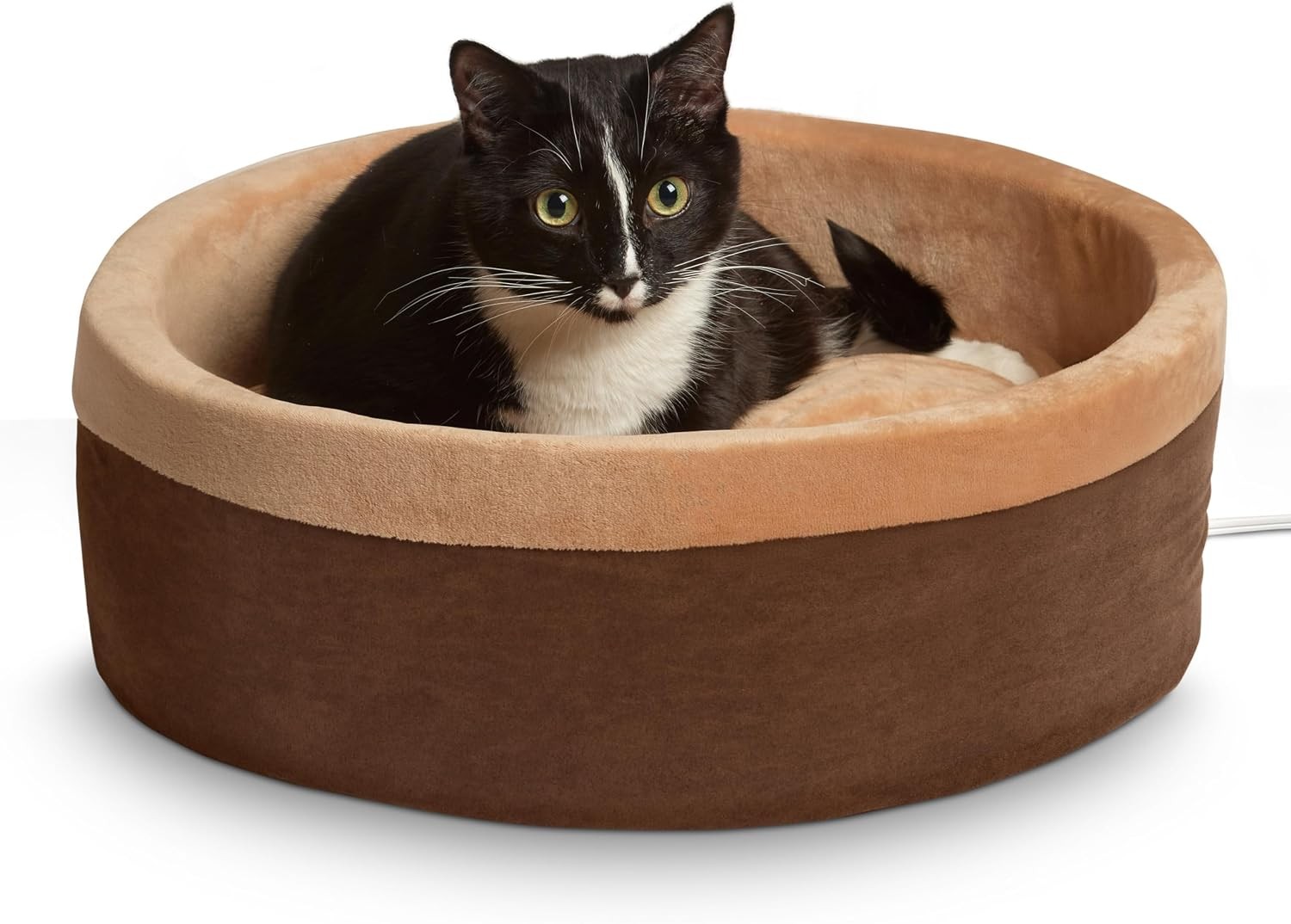
K&H Pet Products Thermo-Kitty Heated Cat Bed
Low-wattage (4W) heated bed — perfect for the foot of the bed, MET safety listed
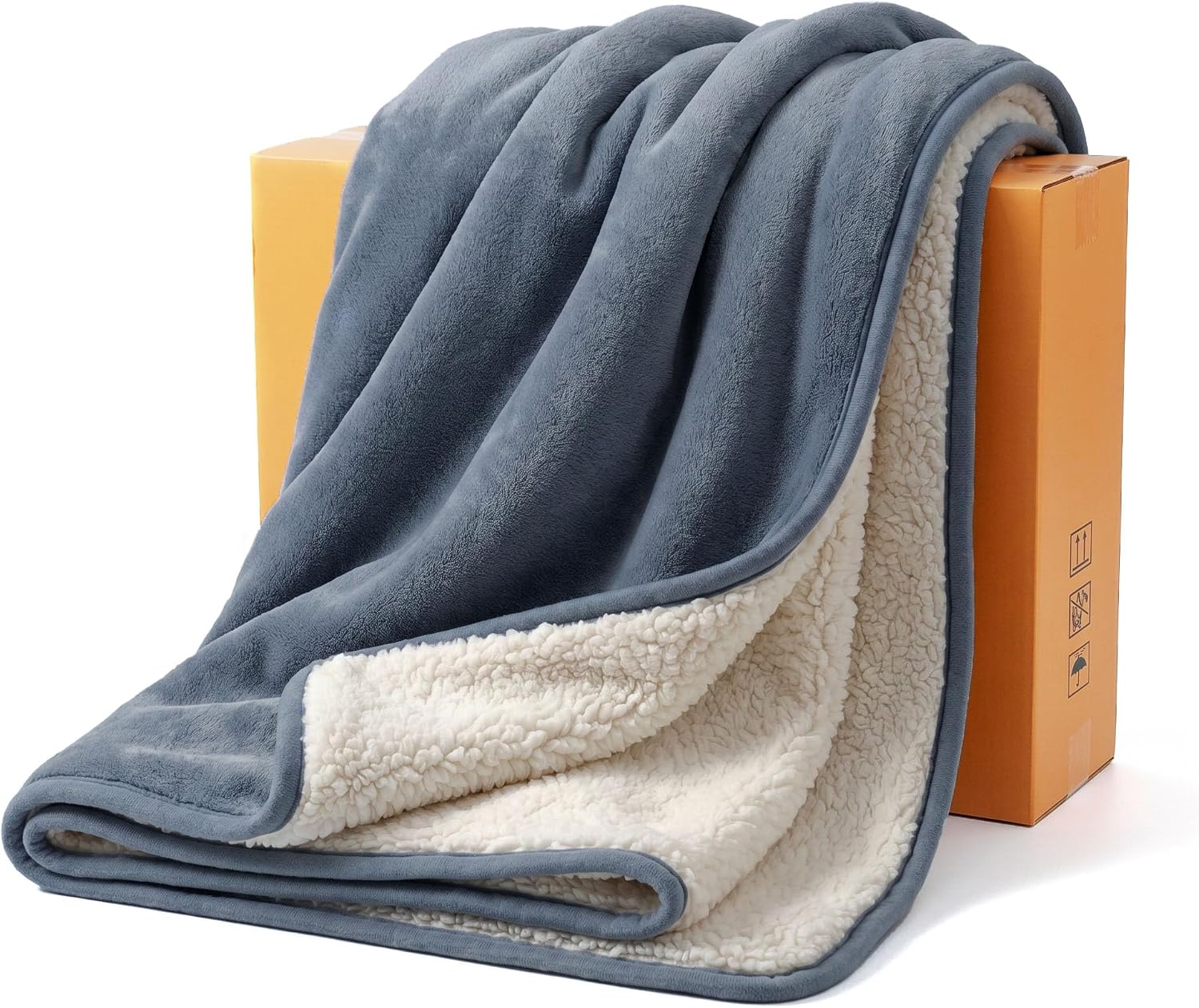
Sunheir Waterproof Pet Blanket
Waterproof backing protects your bedding — machine washable, soft, traps your cat's comforting scent
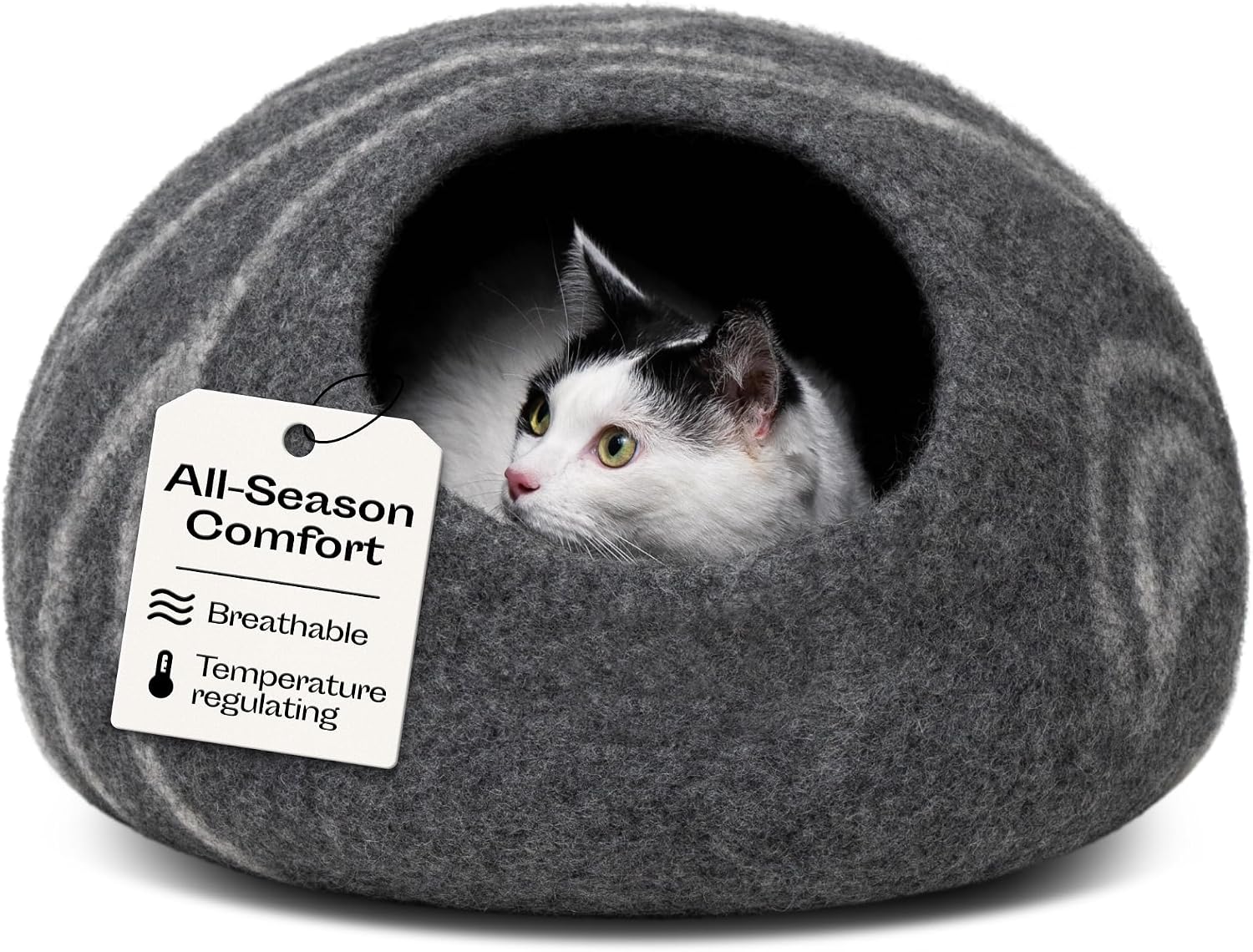
Meowfia Natural Wool Cat Cave Bed
Premium natural wool cave — self-warming, natural temperature regulation, stylish alternative nearby
FAQ
Why does my cat sleep on my legs instead of my feet?
Legs = warmer, more contouring, closer to your core scent. It's a "premium" version of the foot position — usually the most confident/bonded cat in a multi-cat home claims this spot.
My cat sleeps on my pillow. Is that dominance?
No. Pillow sleeping = maximum scent exchange + heat + facial proximity (grooming access). It's high-affiliation behavior, not dominance. Cats don't have linear dominance hierarchies like dogs.
Should I move my cat if they're on my feet?
Only if it disrupts your sleep quality. Gently redirect to a nearby heated bed. Never punish — the foot position is a sign of trust, not annoyance.
Final Thoughts
That weight at your feet isn't random. It's a calculated choice shaped by millions of years of evolution: guard the entrance, monitor the resource, stay cool, stay ready. When your cat settles at your feet tonight, they're not just sleeping — they're doing their job. And that job is loving you on their terms.
Want to understand more of your cat's quirky behaviors? Check our 3 AM zoomies explained, why cats knead, or 15 body language signals decoded.