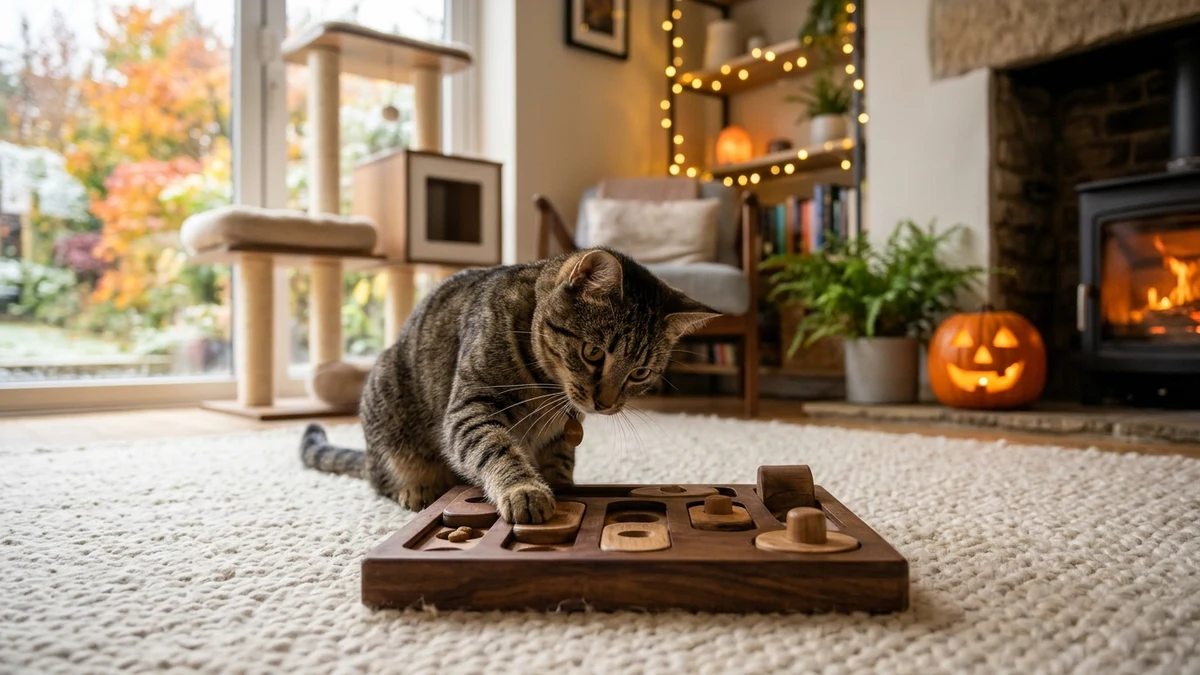
Quick Answer: To keep indoor cats mentally stimulated during winter, veterinary behaviorists recommend a combination of daily 10-to-15-minute interactive wand play (completing the natural stalk-chase-catch-eat predatory sequence), weekly toy rotation to prevent habituation, foraging puzzle feeders and snuffle mats to challenge problem-solving instincts, and heated window bird-watching stations to provide passive cognitive enrichment.

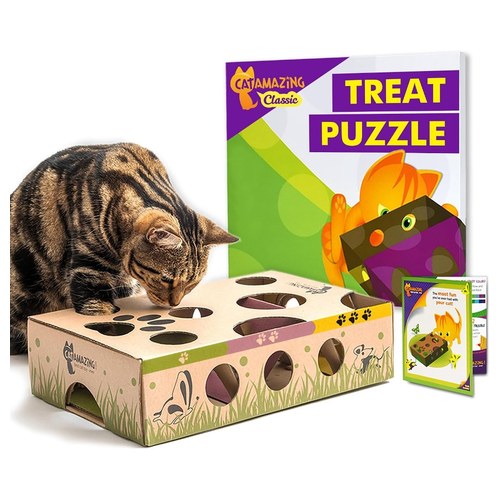 🏆 #1 Boredom Buster
★★★★★ (Top Tested)
Cat Amazing Classic Interactive Treat Maze
Veterinarian-endorsed cardboard foraging maze featuring 3 progressive difficulty levels that channel winter restless energy into rewarding predatory paw problem-solving.
The Winter Feline Paradox: Why Cold Weather Breeds Cabin Fever
In the wild, felines spend up to 40% of their waking hours actively tracking scents, mapping territory micro-boundaries, stalk-hunting small rodents, and processing dynamic outdoor stimuli. But inside a climate-controlled apartment during late autumn and winter, the sensory environment becomes completely static:
- Olfactory Stagnation: With windows sealed against freezing drafts, the influx of fresh outdoor aromas (soil, decaying fall leaves, visiting wildlife) drops to zero.
- Reduced Visual Enrichment: Shorter daylight hours and migrating songbirds reduce the natural “Cat TV” entertainment that keeps feline minds active.
- Circadian Shifts: Decreased ambient sunlight increases melatonin production, making cats more lethargic by day—only to erupt into frantic, pent-up midnight zoomies after dark.
When an intelligent carnivore lacks cognitive outlets, boredom quickly transforms into displacement behaviors: overgrooming flanks raw, aggressive ambushes on human ankles, territorial spraying, or excessive food begging. The antidote is not more passive toys scattered on the rug, but structured mental stimulation.
The 3 Pillars of Winter Feline Cognitive Enrichment
Comprehensive mental stimulation engages all five feline senses through three scientifically proven channels:
- Predatory Interactive Play: Stimulating the instinctive motor patterns of the brain through active human-guided hunting simulations.
- Olfactory Foraging & Food Puzzles: Forcing your cat to employ their superior sense of smell (200 million olfactory receptors) and spatial problem-solving to extract food.
- Spatial & Vertical Architecture: Expanding the territorial volume of your home through multi-level perches, micro-tunnels, and sensory viewing posts.
10 Vet-Approved Indoor Enrichment Games for Fall & Winter
1. The “Ghost Hunt” Wand Sequence (Completing the Predatory Loop)
The single biggest mistake cat parents make with wand toys is waving them wildly in the air for 30 seconds. In the wild, hunting is 90% patient calculation and 10% explosive pouncing. Move the lure like real prey: make it crawl slowly behind furniture corners, rustle under rugs, and freeze unexpectedly.
The Crucial Rule: Always let your cat catch the physical lure at the end of the 15-minute session, and immediately feed them a high-protein treat or their meal. Completing the biological cycle (Stalk → Chase → Pounce → Kill → Eat) triggers serotonin and dopamine release, inducing deep, restful sleep.
2. The “Haunted Pumpkin” DIY Cardboard Foraging Box
Cardboard boxes are the ultimate tactile feline playground. During Halloween season, take a clean medium cardboard box, tape the flaps shut, and cut several 2-inch circular holes into the top and sides (resembling a carved jack-o-lantern face). Drop ping-pong balls, dried organic catnip, and crunchy treats inside. Your cat must use their paws and claws to maneuver the treats out through the holes, providing 20 to 30 minutes of deep cognitive focus.
3. Paper Bag Haunted Mazes
Gather three to four clean brown paper grocery bags (always snip off the handles first to eliminate entanglement hazards). Lay them horizontally on the living room floor, overlapping the openings to create an interconnected crinkle tunnel. Scatter valerian root or silvervine inside. The auditory crinkling mimics dry autumn leaves and activates intense exploratory curiosity.
4. The Weekly Toy Rotation Protocol (Defeating Habituation)
If your cat ignores their toys after two days, they aren’t being finicky; their brains have undergone **habituation**—an evolutionary adaptation where static, non-moving objects cease to register as prey. Divide your cat’s toy collection into three airtight bins. Every Sunday, pack away the current set and introduce a fresh bin infused with catnip or silvervine. To your cat, every week feels like Christmas morning.
5. Snuffle Mats & Foraging Rugs
Originally designed for working dogs, snuffle mats made of dense fleece folds are exceptionally beneficial for indoor cats. Instead of dumping dry kibble into a ceramic bowl (which takes 45 seconds to inhale), sprinkle their meal across the fabric frills. Your cat must employ their sense of smell and dexterous nose to hunt each individual piece, slowing down ingestion and burning significant mental energy.
6. Multi-Compartment Puzzle Boards & Rolling Treat Balls
Commercial puzzle feeders—such as slider boards, peg mazes, and weighted treat-dispensing wobblers—challenge your cat’s executive functioning. Start on level 1 with open cups, then progressively add sliding covers and rotating discs as your cat masters the mechanics. This prevents cognitive decline, especially in aging and senior cats.
7. The Heated Window Bird-Watching Sanctuary (“Cat TV”)
During freezing weather, cold windowsill glass repels cats. Install a sturdy, padded window perch and add a pet-safe heated pad. Mount an inexpensive suction-cup wild bird feeder or suet cage to the exterior glass outside. Watching winter cardinals, chickadees, and squirrels provides hours of passive visual engagement without physical frustration.
8. Vertical Obstacle Trails & High Perches
When square footage is limited, expand your cat’s territory into the vertical third dimension. Linking an elevated, multi-tiered climbing station like the Armarkat 57-inch cat tree with wall-mounted shelves allows your cat to patrol high above the floor. Surveying the home from a high vantage point triggers innate territorial confidence and relieves indoor stress.
9. Organic Cat Grass & Silvervine “Witches’ Brew” Stations
Bring the sensory vitality of the outdoor meadow indoors. Grow fresh pots of wheatgrass, oat grass, or barley grass in safe ceramic containers. Pair this with silvervine (Actinidia polygama), a natural plant containing actinidine that stimulates up to 80% of cats who do not respond to traditional catnip. The intense aromatic scent work provides a safe, euphoric sensory holiday.
10. Clicker Training & Positive Reinforcement Micro-Tricks
Contrary to common myth, domestic felines can easily learn operant conditioning. Using a gentle handheld clicker and freeze-dried chicken treats, spend 5 minutes daily teaching simple cues: “Target” (touching nose to a target stick), “Sit”, “High-Five”, or entering their carrier voluntarily. This direct communicative bond builds profound mental resilience and curbs anxiety.
Feline Enrichment Matrix: Matching Games to Personality
To design the ideal cold-weather daily schedule, assess your cat’s primary motivational drive and life stage:
| Life Stage / Energy | Primary Motivation | Recommended Daily Game | Target Daily Time |
|---|---|---|---|
| Kitten (0–12 mo) | Prey & Chase Driven | Fast-paced feather wand stalking, crinkle tunnels, ping-pong box chase. | 3 × 15-minute bursts |
| High-Energy Adult | Mixed (Prey & Food) | Snuffle mats, multi-level cat tree agility, level-2 slider puzzle feeders. | 2 × 15-minute sessions |
| Food-Motivated Solo Cat | Food & Foraging | DIY toilet roll puzzle tubes, rolling treat dispensers, lick mats. | All meal kibble in puzzles |
| Senior Cat (10+ yrs) | Sensory & Visual | Heated window bird station, organic cat grass grazing, gentle clicker targeting. | 15 min gentle engagement |
Top-Rated Winter Enrichment Gear Tested by Felines Love
To establish a stress-free indoor sanctuary this season, here are our tested and recommended tools:
Cat Amazing Classic Treat Maze
Veterinarian-endorsed interactive cardboard treat puzzle featuring three progressive difficulty levels to challenge feline paws and minds.
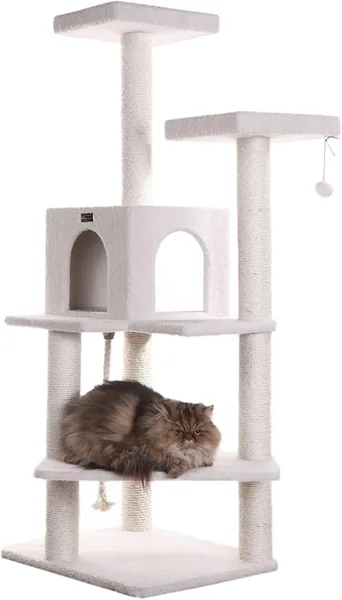
Armarkat 57-Inch Premium Cat Tree
Solid multi-tier vertical climbing structure with sisal scratching pillars and elevated viewing perches to expand indoor spatial territory.

PETLIBRO Granary WiFi Feeder
App-controlled smart feeder that delivers micro-portions on an exact schedule, supporting the natural predatory hunt-eat rhythm automatically.
Frequently Asked Questions
How do you keep an indoor cat mentally stimulated during winter?
Keep indoor cats mentally stimulated in cold weather by conducting two daily 10-to-15-minute interactive predatory play sessions with feather wands, rotating toys weekly to prevent habituation, introducing food puzzle feeders and snuffle mats to challenge problem-solving skills, and setting up heated window perches with external bird feeders.
How many minutes of mental enrichment do indoor cats need daily?
Veterinary behaviorists recommend a minimum of 20 to 30 minutes of active mental and physical stimulation daily, divided into two or three 10-to-15-minute sessions. Combining predatory play with independent foraging puzzles ensures cats expend cognitive energy and experience natural satisfaction.
What are the signs of a bored or understimulated indoor cat?
Key signs of feline boredom include excessive overgrooming (licking fur until thin patches appear), destructive scratching on door frames or furniture, relentless midnight zoomies and vocal yowling, overeating out of apathy, and listless sleeping far exceeding the normal 12-to-16-hour feline rest cycle.
Do indoor cats get seasonal affective depression during cold weather?
While cats do not experience human clinical Seasonal Affective Disorder (SAD) in the same psychiatric manner, shorter autumn and winter daylight hours suppress serotonin production and elevate melatonin. Reduced window stimuli (fewer birds and insects) and closed windows restricting outdoor scent currents frequently lead to lethargy and winter cabin fever.
Are DIY foraging puzzle toys safe for cats?
Yes, DIY foraging puzzles made from clean cardboard tubes, egg cartons, or handle-free paper bags are excellent, safe mental challenges. Always inspect DIY toys for staples, tape, or small ingestible strings, and supervise initial play sessions to ensure your cat does not chew the cardboard.
Cultivating a Thriving Indoor Hunter
Winter may keep the frost outside, but inside your home, your cat remains an agile, intelligent predatory mastermind. By replacing static boredom with dynamic food foraging, interactive predatory chases, and vertical climbing pathways, you fulfill their deepest biological drives.
This fall and winter season, turn cold-weather confinement into a time of cozy bonding and joyful play. For more ways to optimize your feline environment, explore our guides on creating the ultimate indoor cat paradise and decoding your cat’s 15 secret body language signals.