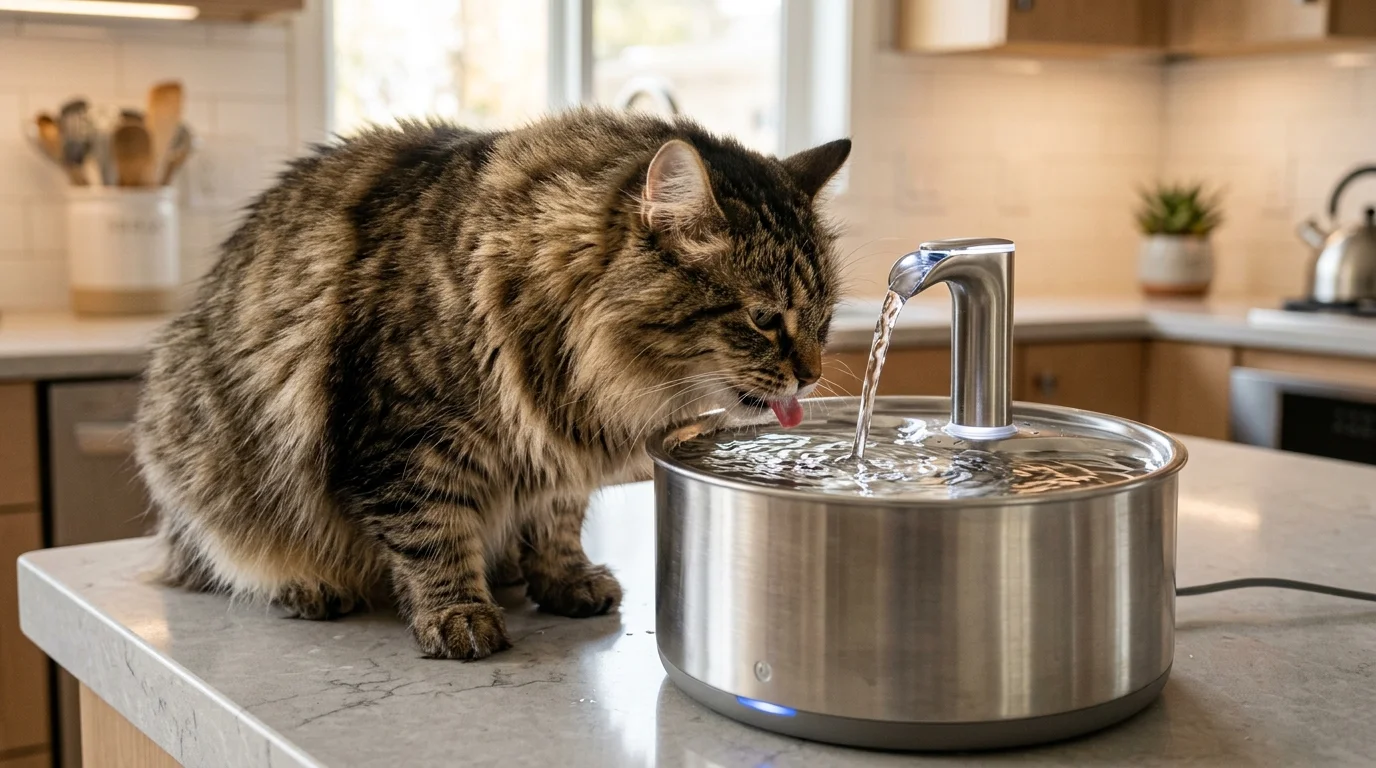
Quick Answer: The best cat water fountains for finicky drinkers are made from medical-grade 304 stainless steel or glazed ceramic (such as the Pioneer Pet Raindrop or PETLIBRO Capsule), which eliminate bacterial chin acne and repulsive plastic odors. Circulating oxygenated streams tap into feline evolutionary instincts, boosting daily hydration by up to 300% to prevent chronic kidney disease (CKD) and feline lower urinary tract disease (FLUTD).

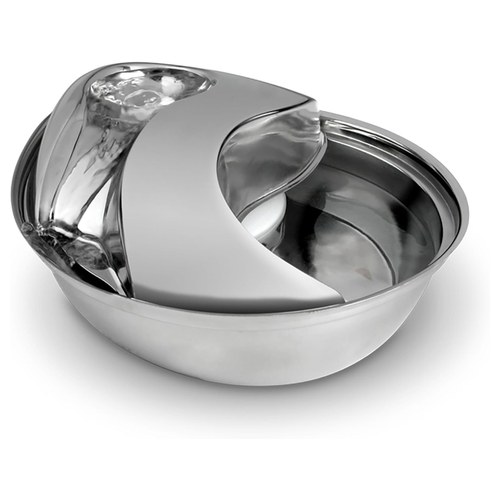 🏆 #1 Stainless Fountain
★★★★★ (Hygienic Grade)
Pioneer Pet Raindrop Stainless Steel Water Fountain
Hygienic heavy-gauge stainless steel teardrop fountain that naturally inhibits bacterial slime and feline chin acne while providing continuous flowing oxygenated hydration.
Domestic cats evolved from the African wildcat (Felis lybica), an arid-climate predator that obtained nearly all its hydration from raw prey tissue. Because of this evolutionary heritage, domestic cats have an exceptionally low innate thirst drive. In modern homes during fall and winter, when forced-air central heating drives indoor humidity down to parched desert levels, static water in standing bowls quickly accumulates dust films and stale odors, causing cats to drastically reduce their water intake.
The Deadly Risk of Winter Dehydration in Indoor Cats
When a cat restricts their water intake, their kidneys work overtime to concentrate urine. In concentrated feline urine, microscopic mineral crystals (primarily magnesium ammonium phosphate, or struvite) precipitate rapidly. If left unaddressed, these crystals coalesce into bladder stones or form life-threatening urethral mucous plugs, especially in male cats whose narrow penile urethras can block completely within hours.
Veterinary nephrologists consider increasing daily fluid intake the single most effective clinical intervention against feline cystitis, chronic kidney disease (CKD), and urethral obstructions. Moving water appeals to their predatory instinct: wild felines know instinctively that flowing streams are safe and uncontaminated, whereas stagnant puddles carry dangerous pathogens.
Stainless Steel & Ceramic vs. Cheap Plastic: Why Material Matters
Before reviewing specific models, it is essential to understand why pet owners should steer clear of inexpensive porous plastic fountains:
- The Chin Acne Epidemic: Plastic is relatively soft. Washing a plastic bowl with an ordinary kitchen sponge creates micro-scratches that harbor virulent bacterial colonies (notably Staphylococcus). When a cat rubs their chin against the rim while lapping, bacteria enter hair follicles, causing painful black comedones and pustular chin acne.
- Chemical Leaching & Odor Aversion: Cats have 200 million olfactory receptors (compared to 5 million in humans). Even high-end BPA-free plastics leach subtle petroleum chemical odors into water that repel cats.
- Superior Hygiene of 304 Stainless Steel: Non-porous food-grade 304 stainless steel and heavy glazed ceramic are completely bacteriostatic, dishwasher safe, and keep water naturally cool.
Top 4 Cat Water Fountains Tested by Felines Love
We tested leading fountains for pump whisper-quietness (under 25 dB), motor reliability, filter multi-stage filtration, ease of scrubbing, and feline drinking adoption:
Pioneer Pet Raindrop Stainless Fountain (60 oz)
Classic teardrop design with a gentle bubbling slide that prevents splashing while delivering pristine, continuous charcoal-filtered water.

PETLIBRO Dockstream 2 Stainless Cat Fountain
App-monitored 3L / 101 oz high-capacity water fountain featuring a wireless pump, 304 stainless steel tray, and real-time hydration tracking.

Catit LED Flower Fountain with Triple Action Filter
Features 3 flow settings with an illuminated LED water-level window and triple-action softening filter that entices finicky winter drinkers.

PetSafe Drinkwell Pagoda Ceramic Pet Fountain
Heavy 70 oz hygienic porcelain construction with dual free-falling water streams that aerate water naturally and prevent chin acne.
Comparison: Top Feline Water Fountains at a Glance
| Fountain Model | Body Material | Water Capacity | Noise Level | Dishwasher Safe? |
|---|---|---|---|---|
| Pioneer Pet Raindrop | 304 Stainless Steel | 60 oz / 1.8 Liters | Whisper Quiet (<25 dB) | Yes (Top Rack) |
| PETLIBRO Dockstream 2 | 304 Stainless Steel Tray | 101 oz / 3.0 Liters | Ultra Silent (<20 dB) | Yes (Tray & Tank) |
| Catit LED Flower | BPA-Free Polymer & LED Window | 100 oz / 3.0 Liters | Low Hum (<28 dB) | Handwash Recommended |
| PetSafe Drinkwell Pagoda | High-Fired Glazed Ceramic | 70 oz / 2.1 Liters | Gentle Trickle (<25 dB) | Yes (Top Rack) |
Strategic Fountain Placement Hacks for Finicky Drinkers
Even the most expensive stainless steel fountain will sit abandoned if placed in an inappropriate spot. Follow these veterinary behavioral rules:
- The 6-Foot Food Separation Rule: In feline evolutionary instinct, drinking water located immediately next to a food kill site is assumed to be tainted with rotting animal viscera. Keep your fountain at least 6 feet away from food bowls.
- Isolation from Litter Boxes: Cats will refuse water placed anywhere near their toilet areas. Keep fountains in separate living areas, hallways, or home offices. Pair this with a clean, low-odor automatic box like the Casa Leo Leo's Loo Too.
- The 1+1 Multi-Cat Formula: Just like litter boxes, territorial dynamics apply to water stations. In multi-cat households, high-ranking cats often guard resources. Provide multiple fountains on different floors to guarantee low-stress access.
Frequently Asked Questions
Why do cats drink less water in fall and winter?
Indoor central heating creates very dry air, but felines possess low natural thirst drives inherited from desert ancestors. When water bowls become ice-cold or develop stale dust films, cats avoid drinking, concentrating urine dangerously.
Is stainless steel or plastic better for cat water fountains?
Veterinarians strongly recommend 304 food-grade stainless steel or ceramic over plastic. Plastic develops micro-scratches that harbor bacterial biofilms, triggering feline chin acne and causing foul plastic odors that repel sensitive feline noses.
How often should you clean a cat water fountain?
Completely dismantle and wash the fountain basin with hot soapy water weekly, and replace the activated carbon/ion-exchange filter cartridge every 2 to 4 weeks depending on the number of cats.
How does a water fountain prevent feline urinary blockages?
Moving aerated water triggers innate hunting and drinking reflexes. Increasing daily water intake dilutes urine specific gravity, flushing microscopic struvite crystals and calcium oxalate stones before they form life-threatening urethral plugs.
Where is the best place to put a cat water fountain?
Keep water fountains at least 5 to 6 feet away from both food bowls and litter boxes. In the wild, cats never drink near kill sites or elimination areas to avoid water contamination.
Hydration is Preventive Medicine
Upgrading to a quiet, circulating stainless steel or ceramic water fountain is one of the most effective, affordable lifestyle upgrades you can make for your cat’s longevity and kidney health.
For more feline wellness guides, explore our resources on feline hydration strategies, multi-cat litter box placement, and choosing low-dust clumping litters.